.png)


The G.O.A.T. 100 #73 | Akira Hokuto

Welcome to the G.O.A.T. 100 where we will count down with PWM wrestling historian Peter Edge the 100 greatest wrestlers of all time, based on many different stats and criteria. A new wrestler will be added on Mondays and Thursdays every week. Here is a link to an introduction essay with Peter explaining his GOAT100 concept. At the bottom of the article you can find the GOAT 100 Portal with links to all profiles so far published, as well as a visual key... Enjoy learning more about the history of our great hobby!


The legacy of Akira Hokuto can be easy to write down in a tweet. Heck, Dave Meltzer did so when he answered a question from someone asking who he thought the greatest women's in-ring wrestler of all time is and the answer he gave was Akira Hokuto.
That answer is very easy to give. In her peak any woman better than Akira is a shot to be one of the greatest to ever do this art.
So the question you all got is, why is Akira not even in the Top 3 women on this GOAT 100 list?
Well, read on and I'll have an answer for you.
Born in what is known now as Yoshikawa in the prefecture of Saitama, Hisako Uno – as her government name is – was one of the many to apply for the All Japan Women dojo, inspired by the action she saw in the era of the Crush Gals, Jaguar Yokota and Dump Matsumoto. She was particularly taken by one of Dump’s “minions” Bull Nakano, ending up as the organiser of Nakano’s fan club.
Uno was so determined to be a pro wrestler that she quit school to join the dojo (don’t do that kids). To be fair, the line associated with bios of Akira Hokuto about her leaving school to join AJW’s dojo is kind of misleading. Compulsory education in Japan finishes at 15 with an option to extend the stay at school until the age of 18. Japan being Japan, the percentage that extend the stay is 95%. Akira is one of the 5%.

By the time the majority of kids of her age would have finished high school, Hisako had made her debut in the ring, and would be the AJW Rookie of the Year for 1985.
The next year she won her first title, the AJW Junior Championship, beating Condor Saito, a member of the same Atrocious Alliance that Dump and Bull were the figureheads of. The 70 days that Uno was Junior Champ – the title belt that the teenage cohort of the AJW roster fought for and fourth of four on the championship totem pole – was the shortest reign until 1992, and Hisako losing the belt in the ring (to Yasuko Ishiguro) – rather than forfeiting “for undocumented reasons” (ie: to move up a division) – was something that wouldn’t happen again until 1992 as well.
In fact Hisako is one of just two wrestlers until this particular year to win and lose the Junior belt in the ring (the other being Noriyo Tateno – and even then, Tateno’s reign with the belt lasted 516 days.)
It would be the tag division where Uno had most of her early work as a pro wrestler. She would get to the final of both the 1987 and 1988 Tag League the Best tournaments with partners Yukari Hotta and Mika Suzuki respectively. In 1987 she went on to win the final and the effort against Chigusa Nagayo and fellow ‘86 dojo graduate Yumiko Hotta in the final the following year would be AJW's MOTY in their year-end awards.
In between those two League final appearances, Uno won the WWWA Tag Titles with Hotta, beating The Glamour Girls (Judy Martin and Leilani Kai) but in a title defence 12 days later – a 2 out of 3 Falls Match, against Kazue Nagahori and Yumi Ogura – a planned spot in the first fall saw Uno take a tombstone piledriver from the second rope which broke her neck.
The match (available to see online) would see Uno carry on wrestling during the second and third falls while seemingly having to hold her head in place. This match established Uno’s unassailable reputation for grit and toughness.
That incident would see Uno on the injury shelf for 8 months. A year after this return, Uno would become “Akira Hokuto”. More than a change of ring name, this was a full overhaul of her presentation. She would dye her hair from the natural black she had worn for the first three years of her career to the blonde she would become famous for and upgrade to more flamboyant attire.
Then she was off to the races when it came to her singles career. A match of hers against Nagayo is on my 1989 MOTY Top Ten in a year that is absolutely stacked in depth for that list. Her progression was such that she had been booked to win the annual Grand Prix tournament. However, in the first match, Akira suffered a knee injury against Manami Toyota after executing a plancha and would have to miss the rest of the tournament. Fortunately for Akira, the initial fears that it would mean a long layoff were unfounded but it was obvious that she was having to manage the damage during the period.
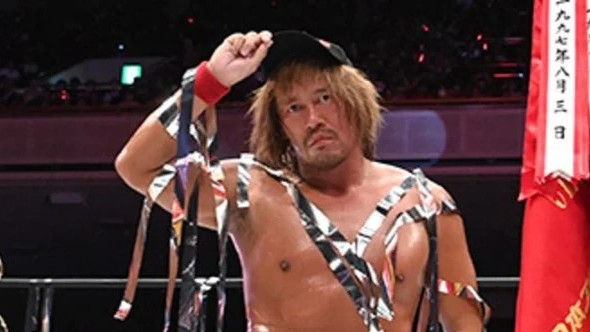
Akira went on to win the All-Pacific Title but as the year went on, she picked up various niggles to the point that she picked up the nickname “The Mummy” from outside the company, such was the amount of wrapping she would carry on her body as time went on.
The All-Pacific belt would become associated with Hokuto over the two years after she picked up the belt in a win over Suzuka Minami, (who she also partnered with in two reigns of the WWWA Tag belts during 1989 and 1990) holding the secondary singles title in All Japan Women for 406 days in her two reigns. Her second title win against Kyoko Inoue was one of many crackers she had in this period.
But it was 1993 that was THE year for Akira. It was the year for AJW as well. Six of my MOTY Top Ten for the year featured AJW wrestlers, and of my Top Ten In-Ring performers for 1993, five were joshi wrestlers. A lot of people would say that 1993 was the golden year for joshi as a whole. In one of the most ground-breaking interpromotional relationships in wrestling history, All Japan Women, JWP and LLPW (Ladies Legend Pro Wrestling) opened a forbidden door that made for one of the most fun years ever in wrestling.

Each of the cornerstones of AJW had their rival from the other promotions in this time. We’ll talk about Aja Kong and Manami Toyota’s era-defining interpromotional rivalries later in this project but the rivalry between Akira Hokuto and Shinobu Kandori would be the most vicious of these rivalries. With a build up to the confrontation involving Kandori – a World Championship bronze medalist judoka – claiming that puroresu was inferior to the shoot-style disciplines, the match itself is a war. Both women blade (well, Wally Yamaguchi – of “choppy your pee-pee” fame – does the blading of Akira and goes too deep, leaving her an utter mess) and Akira learns the hard way that Japanese tables always win. While Hokuto was booked to win, the finish showed her as the one who survived, more than win.

Another achievement of Hokuto’s 1993 – a year when only Kenta Kobashi was better in the ring in my opinion – was winning the GP tournament, which would normally have earned her a shot at Aja Kong’s WWWA World Title. But Akira had picked up an injury in the tournament and felt the match wouldn’t live up to the hefty standards of title matches in the company, so should be non-title. Maybe she had a point: Dave Meltzer only gave it **½ stars. (I have it at 3 ½ stars, FWIW.)
The end of the year saw one of the great, weird stats in wrestling history when Hokuto and Manami Toyota, teaming up in Tag League the Best would face the team of Kyoko Inoue and Toshiyo Yamada twice on the same night, once in the final round in the league section, then in the final straight afterwards – with both matches getting 5 on it from Meltzer (that’s more like it Dave) and above 9.00 on Cagematch.
1994 was meant to be the final year of Akira Hokuto’s career with the big 3 shows of the year as the main stages of the Dangerous Queen Final Countdown.
Wrestling Queendom at the Yokohama Arena is still in the Top Ten highest attendances for an all-women's show and saw Hokuto team with Kandori to face Aja Kong and Bull Nakano. She also main-evented the AJW/JWP/LLPW joint-promoted show at the Budokan, this time teaming with Kong, representing AJW to face JWP’s Dynamite Kansai and Yumiko Hotta.
But all promotion for 1994.11.20 being her retirement was dropped. A change of mind would see Hokuto instead plan to wrestle in Mexico full-time after Hokuto met Antonio Gomez Medina, who wrestled as Mascara Magica. Hokuto moved to the country by 1993’s end and married Medina, commuting to Japan for the already-planned shows of 1994. In CMLL, Hokuto would wrestle under a mask as Reina Jubuki. She would win the promotion’s World Women’s Title in July 1994 and go on to hold the championship for 2 years.
November 20, 1994, was the biggest day in joshi history, both figuratively and literally. The show was held in the Tokyo Dome in front of 32,000 – doubling the record just set by Dream Slam I 18 months before. The show lasted 10 hours and saw 23 matches with around five dozen different wrestlers from six different companies and three sports aside from the art of wrestling (why do I think Tony Khan might try to outdo the length of this show one day?)
The main attraction of the night was an 8-woman tournament that started after the intermission that took place after match No.13, Blizzard Yuki vs. Mariko Yoshida
The entrances for the final match of the show began at 11:20, an hour after the nationwide curfew for citizens under 18, and with the final train leaving the station next to the Dome at midnight, thousands had drifted out of the Tokyo Dome by this time.

Akira would win that main event beating Aja Kong to win the V*Top Five Star Tournament but the occasion felt like an anticlimax – what with the length of show making you feel lethargic afterwards, and Akira’s path to the trophy being laid with matches against Eagle Sawai and Combat Toyada (the two worst wrestlers in a field full of joshi Hall of Famers) and a Kong final with not as much heat as was probably planned in the combatants’ heads when laying out the match.
In Hokuto’s personal life, her marriage to Medina would be over by the end of 1994 and in her professional life, Akira’s workload decreased from the 116 matches in ‘93 to 21 the year after, and 30 in 1995. The 95.9.2 match between Hokuto and Manami Toyota got the MOTYC treatment and got 5 stars from Big Dave – but that was a peak in a valley of tag team matches.
The most prominent match of those tag matches was a match where she teamed with Bull Nakano to face Manami Toyota and Mariko Yoshida on the infamous North Korea show. This would be the weekend where Hokuto met Kensuke Sasaki for the first time and in an often-told story (usually by Meltzer) they would keep the fellow wrestlers in nearby rooms of their hotel up all night as they “fell in love.” (I wonder what the secret police listening to the bugs planted in the wrestlers' rooms made of it all.)

Kensuke and Akira would end up marrying less than six months after meeting in North Korea and are still married to this day. By a year later, Hokuto was gone from All Japan Women. Of the top-tier talent of the generation of AJW talent that graduated from the dojo in the late 80s and helped make the promotion Top 3 in the world when it came to in-ring output, Akira was the first of Kong, Toyota, Nakano and Kyoko Inoue to leave. Akira would eventually join up with her hero Chigusa Nagayo and her GAEA promotion that had started up the year before but in the time period in-between the official switch, Hokuto would wrestle for WCW in their attempt to start a women’s division.

In her Reina Jubuki gimmick, Akira lost to Madusa in the first round of the WCW Women’s Championship Tournament to crown the inaugural champion on an episode of Nitro in November. This saw CMLL strip Hokuto/Jubuki of their Women’s Championship because WCW and AAA had a working relationship.
Hokuto would win the WCW Women’s Title by beating Madusa in the final of the tournament to crown the inaugural champion.
What, why are you looking at me like that for?
To explain, in one of the most “WCW everybody!” moments in the history of the company that produced a lot of them, Akira Hokuto and Reina Jabuki were separate entrants in the bracket. While being eliminated by Madusa in her masked persona, Akira beat Meiko Satomura and KAORU (both GAEA colleagues) in the first two rounds before finally beating Madusa in the final at the Starrcade PPV that ended WCW’s PPV calendar in 1996.

Once she started to appear on GAEA, Hokuto would enter into a rivalry with Meiko Satomura and would lose the WCW Women’s Title to Devil Masami at the Double Destiny event in Kawasaki in the only title change in the title’s history. A match against KAORU on 1997.4.12 would last 4 times longer than the match the pair had on WCW Pro four months before and be “notebook” but it was few and far between when it came to ****+ matches that Hokuto would have in her time in GAEA as she spent her part-time stint at GAEA helping put over others.
Hokuto would team with Mayumi Ozaki, winning the tag titles, her only title win in GAEA which saw a fantastic match against Satomura and Nagayo which helped lead into a singles match between Hokuto and Satomura.

Akira Hokuto vs. Meiko Satomura on 2001.4.29 was the first joshi match I ever watched. Without wanting to go into Peter lore too much we had Telewest Cable growing up and not Sky and The Wrestling Channel wasn’t on Telewest so I had a neighbour record bits of The Wrestling Channel but I had to cherry pick the best bits to record and amongst a Best of TWC night that I asked Stan next door to record one time was Hokuto/Satomura and it was unlike anything I had seen before from women’s wrestling.
This match is the reason I first took an interest in joshi wrestling and have been an advocate for women’s sport in general. Hokuto and Satomura that night in Kawasaki is one of the great matches of the 21st century in my opinion. With callbacks to the Kandori match of April 1993, it was violent as wrestling can get with the strikes the pair unleashed on each other.
Also, it’s my example of why Dave Meltzer will never get round to rating Mercedes Mone vs. Maya World. I’ve been waiting 25 years for Meltzer to rate Hokuto vs Satomura on 2001.4.29 and still nothing from him (5 stars from me and it’s my 2001 MOTY.)
Not long after what is arguably her greatest hour, Hokuto announced that she was retiring. Her final match was planned for April 7, 2002, when she teamed up with Satomura to face Nagayo and Ayako Hamada, a joshi wrestler who was destined for great things like Meiko.
Hokuto ended up working with a broken rib, but just as she had done the night she broke her freakin’ neck and all those times she worked with tape all over her body, she defied the pain, and against puroresu tradition for a retirement match, Akira scored the pin on Hamada with her Northern Lights Bomb.
Of course she wasn’t done done. She would end up wrestling seven more matches. She would be the only woman to compete in AJPW, wrestling twice for the company. She would wrestle Kendo KaShin in a match that lasts as long as Kasabian’s Club Foot (3:34) and one of the more bizarre matches in the contrast of teams in a 10-man tag team match where she teamed with her husband Sasaki, Genichiro Tenryu, Katsuhiko Nakajima and Kenshin to face Jamal, Taiyo Kea, Buchanan, D-Lo Brown and Taka Michinoku and she would also team with her hubby to face The Florida Brothers, one of the more fun gimmicks in puro and also squash Stalker Ichikawa in two genius one-sided beatings.
It’s a case of ‘if only” when it comes to Akira Hokuto. To use a sports comparison, Akira Hokuto is Bill Walton. Thought to be a future contender to be on their sports Mt. Rushmore, a substantial amount of injuries meant they didn’t hit the heights people thought they would but they had a year when they were the best in their sport. The only difference between Hokuto and Walton is that Hokuto didn’t listen to The Grateful Dead non-stop (that we know of.)
Hokuto had that one insane year, 1993. There were many other good years but 173 matches from 1994 to 2001 at an average of 21 matches a year from the age of 26 years old onwards is a story of what could have been when it came to the career of Akira Hokuto. It could have been worse though. Under old joshi precedent, she would have been retired when she hit 26 in the year of 1993. Thank goodness the “retire at 26” rule was rescinded just before Akira Hokuto hit the magic number and we ended up getting as much Akira Hokuto as we did.
G.O.A.T. 100 Portal
Links to all GOAT100 profiles published so far
G.O.A.T. 100 Image Grid


Comments