.png)


The G.O.A.T. 100 #74 | Ray Mendoza

Welcome to the G.O.A.T. 100 where we will count down with PWM wrestling historian Peter Edge the 100 greatest wrestlers of all time, based on many different stats and criteria. A new wrestler will be added on Mondays and Thursdays every week. Here is a link to an introduction essay with Peter explaining his GOAT100 concept. At the bottom of the article you can find the GOAT 100 Portal with links to all profiles so far published, as well as a visual key... Enjoy learning more about the history of our great hobby!


Every nation in wrestling has a style and also a story that it tells. When it comes to Mexico, the style of lucha is one that marries pageantry and acrobatics – but in its soul, the story of lucha libre is one of family and the honor that the generations that follow each other wish to aspire to.
Of all the most prominent patriarchs in the land of lucha, Ray Mendoza is one of the most significant.
Jose Diaz Velasquez was born on July 6, 1929, in Mexico City, growing up in the Tepito district of the capital – which was a famed neighbourhood because of its violent history that has never gone away, with crime and gang activity still associated with the area decades after the tag first stuck.
The poverty that Tepito was suffering from had reached the Velasquez family, with Jose leaving school at 15 so he could support his family which included a wife in Lupita Mendoza, who he married when fifteen. Velasquez found work in a bakery but also endeavoured in athletic activity in his spare time, finding joy in cycling, swimming and baseball, but excelling in boxing – turning pro at 21.
Velasquez fought under the name of Joe Diaz, under the tutelage of Juan “El Charrito” Espinosa, a famed boxing coach in Mexico. A falling out with Espinosa due to tardiness led to Diaz no-showing a fight against Pirrin Vega, which led to Velasquez being in the search of a new camp to train in. He gave a wrestling school a try and according to folklore, the wrestlers there “took advantage” of Jose, a knee to his back led to the beginning of the end of his boxing career. After 20 fights, Jose hung up the gloves.
He would still lift weights at the gym where he had been manhandled by the wrestlers months earlier, (the seeming lack of hard feelings there has me suspecting that this story might be a work) where he was encouraged to join the lucha business by the owner of the gym, Efren “Ray” Carrasco. Jose agreed – leaving the government health inspector job he had taken after his retirement from boxing.
Trained in the amateur and submission techniques by Efren, it would be a collective of four guys that trained Velasquez in the art of lucha libre with Huracán Ramírez (innovator of the huracánrana) being the most notable of the quartet.
Jose’s debut came in Monterrey, under the name of El Pelon (The Baldy) – Chato Diaz. For a couple years he would jump from stage name to stage name – using the names "Indio" Mendoza, El Rayo Rojo and El Hombre del Rayo Rojo. He then worked under a masked identity as Gargantua in 1954 & 1955 until losing the mask to Al Velasco, before finally settling on Ray Mendoza – one name taken from his trainer and the other from his childhood sweetheart (I think.)
A natural rudo, Mendoza was coming into his own in the Light Heavyweight division (but could trim down to Middleweight if the occasion warranted it) and he impressed with every big chance he got. Within 18 months of the name change to “Mendoza”, Ray was debuting in Arena Coliseo.

By the end of the 50s, Mendoza was part of a main event trio group with Rene Guajardo and Karloff Lagarde and they were big box-office attractions – seen as a Top-Ten attraction worldwide.
The trio, named Los Rebeldes (The Rebels) had matches against the tecnico trio of El Santo, Rayo de Jalisco and Blue Demon. They later ended up in a rudo vs. rudo rivalry (very rare in this era of lucha) with the three Espantos, these matches becoming famous because of the bloodbaths and the unusual sight of six rudos brawling all over the arena. The rebels were also real-life best friends and locker-room leaders whose efforts would lead to improved salaries and working conditions for both themselves and their fellow roster members.
Ray’s first singles title would be the NWA World Light Heavyweight Title after beating Dory Dixon in Guadalajara, making him the first Mexican to hold that belt in its so-far seven-year existence.
The Light Heavyweight belt would be known as Mendoza’s belt, with six reigns totalling 1,318 days, the most reigns anyone had with the Light Heavy title and the second-most combined days behind Gory Guerrero. (That being one reason Gory is ahead of Ray on this project!)

The Guerrero / Mendoza feud for the belt would become one of the top feuds in lucha, with their styles being perfect for each other. Guerrero’s technician style and the brawling style that Mendoza had honed were perfect for the wrestling soulmates they would go on to become. They were seen in lucha circles at the time in the same light as Misawa and Kobashi would later be in puro circles, or Flair and Steamboat in North American wrestling.
In 1965, Mendoza would turn tecnico and immediately feud with his (now former) Rebeldes teammates. Seen as one of the big face turns of the era in the land south of Texas, it started on June 18 when the teams of Mendoza & Cavernario Galindo and Benito Galan & Karloff Lagarde would get to the finals of a one-night tag-team tournament. All four were rudos and after Galindo and Mendoza won, Lagarde would be a bad loser – so he challenged Mendoza to a hair vs. hair match, which was then held on July 30 and won by Mendoza. Guajardo, the man in the middle, sided with Lagarde, claiming that Mendoza had just gotten greedy. A few weeks later, at Arena México, Guajardo and Lagarde faced off against the newly tecnico Ray Mendoza with Mil Máscaras. The next week El Santo replaced Máscaras – with the icon of lucha already being matched in cheers by Mendoza.
The feud with Lagarde & Guajardo continued through 1965 to 1967, with Guajardo taking Mendoza’s hair – a match which sold out Arena México with a gate of 150,000 pesos, one of the best gates of the 60s in Mexico.
Mendoza and Guajardo would also feud over the NWA Middleweight that was identified with Rene, with Mendoza winning the belt on March 10th of 1967 but then vacating that belt because he didn’t want to cut to the weight required to defend the Middleweight belt (as the Mexican State Commission actually took weight limits seriously.)
Mendoza won the Light Heavyweight Title in August 1967, again beating Dory Dixon in a tournament final after Gory Guerrero left EMLL the year before, after refusing to drop the belt to Mendoza. (Going up and down in weight for pro-wrestling defences does seem like a bad priority, even for an art as awesome as wrestling!)

One of the main rivals Mendoza had during his time as Middleweight champ was fellow G.O.A.T. 100 member El Solitario. At that point, Solitario was still new to the lucha game and Mendoza was a fantastic base to get the man that EMLL hoped to be a top-tier heel over – even if Ray tried to play his “that don’t work for me brother” card, trying to get EMLL to book him to win a lucha apuesta match against Solitario. But the EMLL higher-ups back then had a lucha libre monopoly – on the negative side that allowed them to be terrible about compensation, but for all their stinginess, they didn't let talent have their own way on creative issues.
Ray would go to Los Angeles often and wrestle for the LeBells, where he feuded with Jim Tolos for the NWA United National Championship that would later become a fixture of All Japan Pro Wrestling before the Pillars era of that company. Mendoza would win the title in December 1969 at the Olympic Auditorium, but after 3 months holding the belt, Tolos would reclaim it because (in the storyline) the NWA claimed that the referee in the bout made a quick count in the deciding fall.
(Maybe Richard Nixon made a phone call to NWA President Sam Muchnick.)
The actual reason for this was that the promotion that owned the belt at the time, the JWA, wanted Tolos to drop the belt in a bout versus their guy, one they had high hopes for to take the business to great heights in the 1970’s, Antonio Inoki.
But in Mexico, Mendoza would be one of the key players in the formation of the first big breakaway group in lucha. EMLL would bring in Salvador Lutteroth Jr. and his nephew Francesco (better known as Paco Alonso) joined the office that Salvador Sr. was the head of, which really pissed off the boys in the back.
While Sr. wasn’t the most popular by any stretch, he was respected for being the man who brought lucha to the masses. Whereas Jr. wasn’t respected one bit. Worse yet, this succession plan that was laid out was an obvious telegraph for the idea that Sr. wasn’t going to be around for much longer.
Mendoza was one of the boys that wasn’t happy with the potential future of EMLL. Not just for himself but for his sons.
By 1974, three of his eight children had made their debuts in the ring. Jose de Jesus, Jose Alfredo and Arturo Mendoza became Villano I, II and III respectively and Ray, like any loving father, was very attentive to their careers and thought they were not being pushed enough – well, compared to Solitario.
He and his fellow Rebeldes, Rene Guajardo and Karloff Lagarde gave their notices and contacted Francisco Flores, a former promoter that was in charge of organizing shows in the smaller towns in EMLL’s touring rotation and became the founding fathers in what was known originally as Lucha Libre International, better known internationally as the Universal Wrestling Association.
(The UWA initials were actually what the kayfabe “governing body” for the titles in the new promotion was called, like IWGP is in New Japan.)
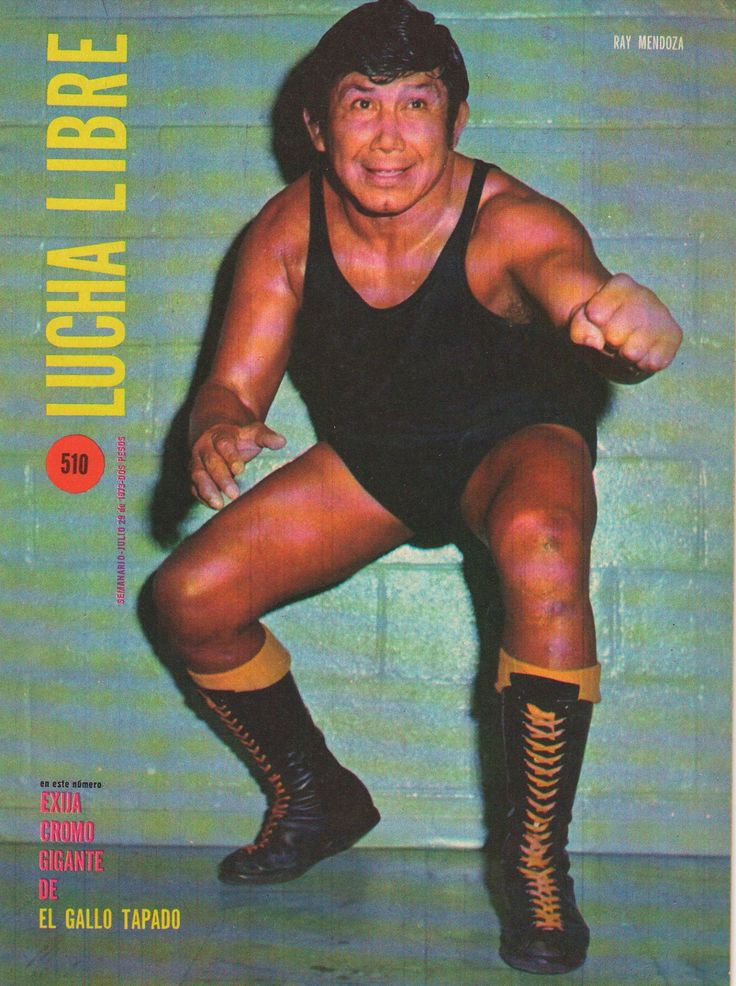
Mendoza would become the first UWA World Light Heavyweight Champ, winning the belt three times in the 70s, dropping it to the relatively obscure El Audaz, (doesn’t even have a wikipedia page) his old rival Solitario and to the WON Hall of Famer Gran Hamada at the end of each reign.
Mendoza was in his fifties as the industry hit the 1980s and he was now placed in bloody brawls with more frequency than in his prime, and in 1983 he retired. He faced Solar I in his last match, and it was a retirement that stuck. He would referee special attraction matches such as the famed Solitario vs Dr. Wagner lucha apuesta match, and was a lead trainer in the UWA gym and also became the head commissioner of the Mexico City Boxing and Wrestling commission in 1988 where he was in charge of regulating boxing and wrestling events in Mexico, licensing wrestlers and approving mask matches and the like.
His fourth and fifth sons, Tomas and Raymundo, joined their siblings in the squared circle and joined their father in the Wrestling Observer Hall of Fame in 2022. Ray had been one of the inaugural class of 1996.

Villano I-III were pushed from the outset of LLI/UWA’s formation even though II’s appearances were becoming less frequent. IV and V will be the best known by fans north of the border via their appearances on WCW television but of the five sons of Ray Mendoza that stepped into the ring, the most famous moment among the five belongs to III.
The Atlantis vs Villano III lucha apuesta match in March 2000 is one of the most memorable lucha contests in its history. It received the Wrestling Observer MOTY award, the only time a match in Mexico won this award. The scenes after the match are among the most emotional in wrestling history. Ray’s face – overwhelmed by tears as he untied the straps on his son’s mask after his loss – is the ultimate mask vs mask final scene. This moment was very much the template for the post-match scenes of the Americano apuesta match that happened in AAA earlier in 2026, but (WWE being WWE) had none of the feeling of that night in 2000 in Arena Mexico.

Three years later, Ray was admitted to hospital, suffering from kidney failure. Very quickly, he suffered an arrhythmia in his right lung and would die on the night of April 16th.
Ray Mendoza’s legacy is something you can still see today. He helped form the first breakaway in lucha that saw the monopoly of EMLL broken. AAA and the generational shapeshift that would happen in wrestling from 1994 doesn’t happen without Mendoza and co. making the first move to break from the Lutteroth family. When shaping this list, and deciding the inclusion of the stars from lucha’s history – something that I’ll admit was (and still is) a blind spot for me – when you read up on Ray Mendoza’s story, he absolutely has to be included in this list. His is a story that can be learnt from.
G.O.A.T. 100 Portal
Links to all GOAT100 profiles published so far
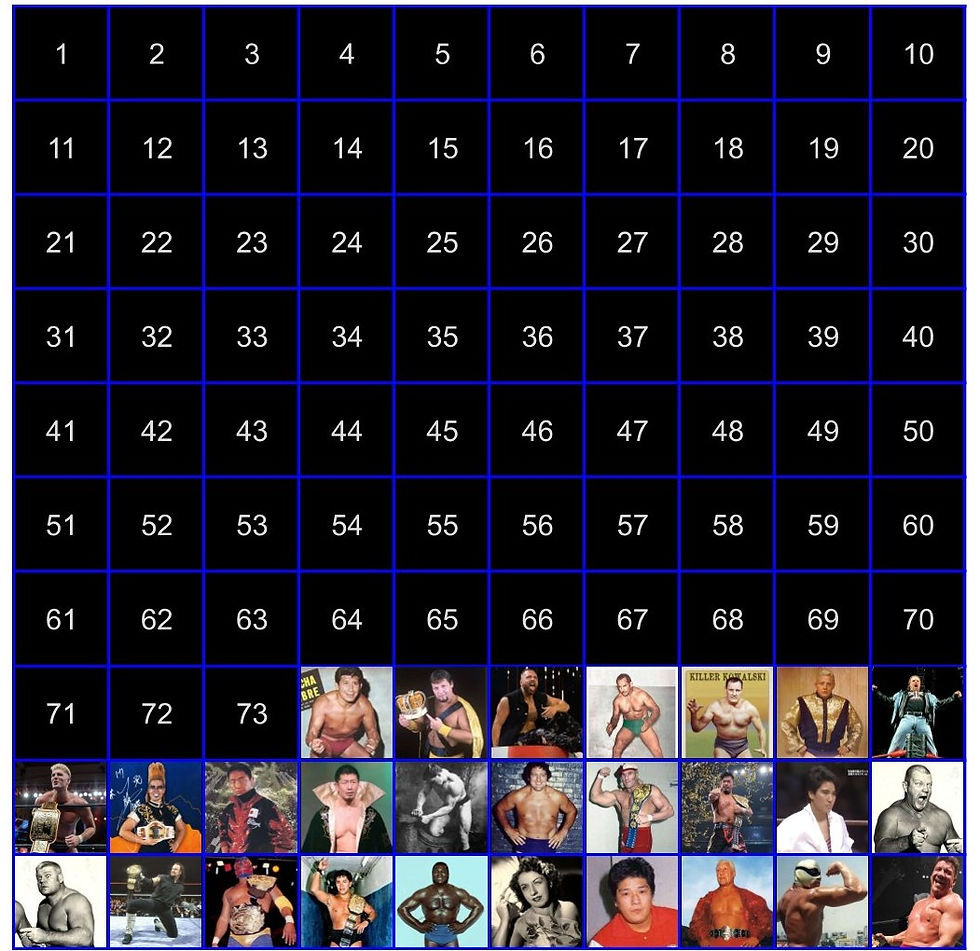
G.O.A.T. 100 Image Grid


Pokepath TD is a fantastic choice for anyone who likes experimenting with tower defense strategies. I appreciate being able to change my approach instead of being locked into one perfect solution.