.png)


The G.O.A.T. 100 #84 & 83 | Koji Kanemoto & Shinjiro Otani

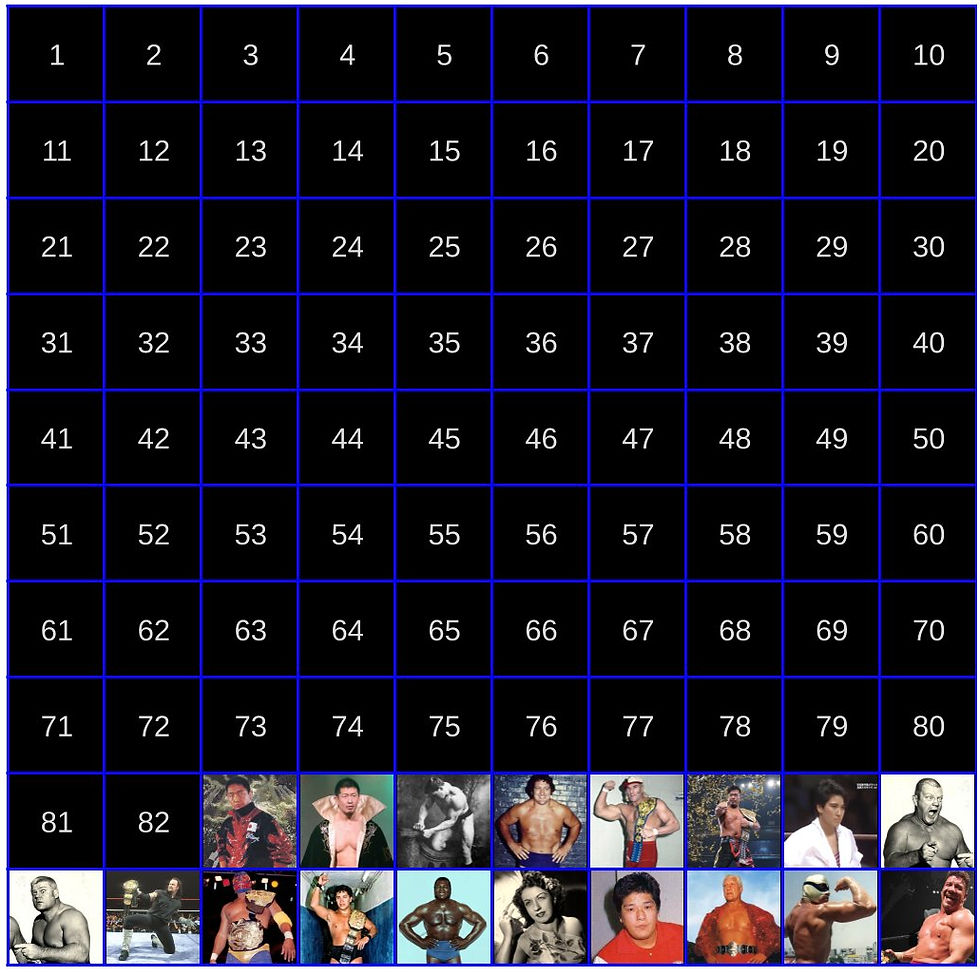
Welcome to the G.O.A.T. 100 where we will count down with PWM wrestling historian Peter Edge the 100 greatest wrestlers of all time, based on many different stats and criteria. A new wrestler will be added on Mondays and Thursdays every week. Here is a link to an introduction essay with Peter explaining his GOAT100 concept. At the bottom of the article you can find the GOAT 100 Portal with links to all profiles so far published, as well as a visual key... Enjoy learning more about the history of our great hobby!


Every great story has a hero and a villain. Or two! Is Batman the hero that Gotham needs without The Joker? And he can't fight the Joker every week, doesn't he need a Bane as well? Superman is Superman because of Lex Luthor… but also Brainiac. And in wrestling, the great heroes are the same.

The Junior Heavyweight division in New Japan Pro Wrestling made lighter-weight wrestling cooler in a country other than Mexico when it had always struggled to get traction anywhere else. We’ll talk about Tiger Mask in a later installment, and how the first man behind that mask made the Junior Heavyweight division… but Jushin Liger was the second guy that made the Junior Heavyweights must-see TV. But Liger, in his superhero guise, needed that villain, and in the mid-90s, New Japan (while its heavyweights were breaking Japanese box office records) had not one but two lighter-weight antagonists for Liger to combat in the company’s finest hours to date.
Born in Kobe on Halloween in 1966, Koji Kanemoto came from Zainichi Korean descent as his grandparents emigrated to Japan whilst Korea was under Japanese rule from 1910-1945.
Life for Zainichi Koreans hasn’t been fun, with historical and systemic discrimination. The Korean immigrants would lose their citizenship rights post-World War II, being classed as foreign nationals. Because of their status, Zainichi’s are not allowed to vote in general elections, even down to fourth and fifth generations of the ethnic Koreans living in the country.
Anecdotally, life for Zainichi’s in school has seen bullying and harassment. While Zaitokukai (Citizens against the Special Privileges of the Zainichi) as a specific group did not exist until 2006, the extremist views that are sadly shared existed, and might have even been stronger in the days when Koji was in school. Despite these barriers, Koji athletically excelled in school with judo being his specialised subject. His time as a judoka extended past school and caught the eye of New Japan Pro wrestling, who gave him a call and invited him to their dojo.
Making his debut on 1990.11.6 in a battle royal, the next day saw his first singles contest against Michiyoshi Ohara. Koji would get the young boy treatment, but would get his chance to be in the ring with legends like Hiroshi Hase, Masahiro Chono and Shinya Hashimoto in multi-man tags.
His debut in the 1992 edition of the annual Jr. Heavyweight singles tournament – back then called "Top of the Super Juniors," saw Koji in a field that included Too Cold Scorpio, Negro Casas, Fit Finlay, Eddie Guerrero, Chris Benoit (in his Pegasus Kid gimmick) plus the top Japanese native Juniors at the time: Jushin Liger, El Samurai and Norio Honaga. Koji would go 1-7 with that solitary win being against Casas in what was both men's final matches in the tournament.

After a handful of bookings in WAR and an excursion in Mexico, Kanemoto was given the role of the latest "Tiger Mask." Now the third incarnation of the famed gimmick (after NJPW bought the rights to the Tiger Mask I.P back off All Japan) Koji was hand-selected for the role by NJPW booker Riki Choshu. But thanks to a combination of injuries, plus Koji’s attitude toward the gimmick, plus the stylistic difference, (Kanemoto’s technical style being in contrast to the high flying work that is associated with Sayama’s OG Tiger Mask) the third incarnation is widely regarded the worst of the five that made mainstream puroreso.
(For what it’s worth, TIL that there have actually been eight people in total that have officially worked as Tiger Mask, three beyond the better-known incarnations: with Ikuhisa Minowa, the shoot-style wrestler, as well as kickboxers Toshio Fujiwara and Takeru Segawa being the fifth to seventh generation of the gimmick.)

The 1994 January 4th Tokyo Dome show with Genichiro Tenryu vs. Antonio Inoki as its main event would see Tiger Mask face Jushin Liger. It has been presented by some sources that this match was a Mask vs. Mask match. It wasn’t.
Which makes what followed all the more striking, as it was not due to any stipulation: after Liger took the win following a shooting star press, Kanemoto took his mask off, threw it at Liger and left the ringside area to go to the back, making it the final time Kanemoto wore the mask – well, in Japan that is.
The time Kanemoto spent in AAA (yes, AAA and NJPW had a working relationship once) in 1994 saw Koji in the Tiger Mask hood in an 8-man tag, where "Tiger Mask" tagged with El Hijo del Santo, Jushin Thunder Liger and Octagon against Blue Panther, Eddy Guerrero, La Parka and Psicosis in a really great match at TripleMania II-B. Finally, for one last time in the noughties, Koji would have the mask back on for AAA’s World Cup tournament.
While Kanemoto was in his lucha era, meanwhile in New Japan canon, Kanemoto had not come back after his loss to Jushin Liger. He was gone from New Japan for 365 days. Koji was on another excursion, this time in Germany. At the Jan 4th Dome 1995 show, Koji was back with an attitude. In pre-match promos, Koji said that he had 3 goals. Become a headliner, champion by the age of 30 and also own a Mercedes-Benz by that age.
(Had British wrestling not completely collapsed by the mid 90s and Koji Kanemoto spent his second excursion in the UK, would the third goal had been to own a Vauxhall?)
His comeback to New Japan would see Kanemoto beat Yuji Nagata, and Kanemoto’s 1995 from that point on would show the world what Koji had learnt in Germany, at the Catch Wrestling Association with its wrestling very focused on the European style and its “physical chess” motif… with a pinch of the “morality play” style of American wrestling and add some puroreso Strong Style to the mix.
Koji made his promise to take gold come true within weeks, beating Norio Honaga for the Junior Heavyweight title just 46 days after the Nagata match. After swapping title wins with Sabu in the spring, he would hold his gold for the rest of the year.
After his 1995 ended with a foray to the U.S to be part of NJPW’s team at Starrcade in which Kanemoto faced Alex Wright – someone who he had already encountered in his excursion in Deutschland – the traditional start to the New Japan year of 1996 saw Kanemoto and Liger go at it again after their 1.4 match two years before. This time, the IWGP Junior Heavyweight Title was on the line.
Liger – who was back from a severe leg injury that took him out of action for almost a year – would go up to 2-0 in he and Kanemoto’s series of matches at the Dome that night, in a 4-star match with both kicking out of big bombs… until Jushin conched it by hitting two Liger Bombs and then a corkscrew Stardust Press, which won him the match and began his seventh reign as Juniors champ.
The next time New Japan entered the Tokyo Dome would be at the end of April, and this time Kanemoto would be in the show opener, teaming with a kindred spirit in Shinjiro Otani. Otani was also displaying a no-nonsense attitude to wrestling, but they had more in common: their shared passion was an absolute fucking hatred of masked wrestlers.
Shinjiro Otani was born in the city of Yamaguchi in 1972 and was a wrestling fan in his childhood, especially NJPW. Otani has talked about going to shows when New Japan would come to his hometown, a city on their regular tour rotation but not one of the major ones. At one point during his childhood, he snuck into a hotel in a bid to try and meet Antonio Inoki. Initially, he was stopped by security, but on Inoki's instruction, they let him through and the New Japan boss signed Otani's "闘魂" (fighting spirit) hachimaki. The young Otani then vowed to Inoki that he would one day make it to New Japan.
After finding success in amateur wrestling in school, once Otani graduated, he made the plan to move from Yamaguchi to Tokyo 600 miles away, to go to a dojo to learn to be a professional wrestler. Guess how Shinjiro’s parents took to that idea.
The difference of opinions between Shinjiro and his parents would culminate with the son running away from home at 19 with 50 to 60 thousand yen to his name, the equivalent to $400 USD at that time. After being homeless for a time, Otani found a tatami (traditional Japanese floor mats) dwelling at a cost of 24,000 yen, a bare room with shared toilet facilities and no futon to sleep on.
He would find a dojo in Tokyo run by Animal Hamaguchi to train at. Eventually, Hamaguchi would bring Shinjiro to the New Japan dojo and he impressed at the audition, getting a spot in a class, joining Yuji Nagata in the Class of ‘92.
Otani’s debut would be on June 25, 1992, against Hiroyoshi Yamamoto. With signature moves standing out on his moveset such as a springboard dropkick and a corner face wash, Otani started to pick up a following among the New Japan fanbase even in his frequent losses as part of his young boy days.
Such a following would get Otani opportunities to team with Jushin Liger, with matches against Dean Malenko & Eddie Guerrero and El Samurai & Kanemoto in his Tiger Mask gimmick, impressing. Singles matches against Liger at the Top of the Super Juniors and on the G1 Climax undercard also impressed. The former match was part of his debut bow in the TOSJ. In the tournament as a whole he got two wins to his name: Masao Orihara via forfeit after a Masao injury, and Black Tiger II (Guerrero) in a big upset in NJPW canon (maybe the biggest in its history to that point.)
Otani would do shots in the interpromotional NJPW vs WAR feud and would be a standout in the now-renamed annual Jr. heavyweight tournament with a 5-5 record in the 1994 Best of the Super Juniors, including another impressive win over Eddie Guerrero’s Black Tiger. Otani would then win the Super Grade Junior Heavyweight Tag Tournament, (precursor to the Super Junior Tag League) teaming with Wild Pegasus to beat Black Tiger and Great Sasuke in the final. Then in 1995, he would get all the way to the final of the BOSJ, losing to Pegasus in the end.
The Kanemoto / Otani vs Liger / El Samurai feud would be the backbone of the Junior Heavyweight division in the second half of the 90s (going concurrently with the NWO Japan storyline that was the dominant feature of the Heavyweight division.)
The pair of Kanemoto and Otani – who had stuck with the black trunks and boots look required of "Young Boys" that the vast majority of New Japan wrestlers shunned once they were back from an excursion – felt that they had figured things out, that Liger and Samurai were against what the Junior division should be. Because in their minds, Masked wrestlers went against the true spirit of everything New Japan was.

In addition to that excellent story hook, another aspect that helped the feud and the division was the prominence of a new singles title concept in Juniors wrestling. The J-Crown was a unification of eight titles from all over the world. That unification would happen in one night – August 5th, in the middle of G1 season in New Japan. Putting a show like this on in that timeframe just showed that the strength of the Jr. Heavyweight division in Japan had reached parity with even the big annual heavyweight singles competition in New Japan.
The J-Crown would be formed by Jushin Liger, who at this point had been placed in charge of booking duties for the Junior Heavyweight Division. A one-night tournament was set with the holders of eight titles entered with the winner of each single-elimination match taking the loser's belt until there was one with all eight belts in his possession.

The IWGP Jr. Heavyweight Title (1) held by Sasuke would be in the prize pot, along with Michinoku Pro’s British Commonwealth Title (2), (which originated in the Brit promotion All Star Wrestling) held by Liger, the NWA Jr. Heavyweight belt (3) Danny Hodge had made famous, CMLL’s NWA World Welterweight Title (4) made famous by El Santo, WAR’s Junior title (5) and the WWF Light Heavyweight Championship (6) – that last a product of the business relationship between the New York territory and the UWA, which then landed in Michinoku Pro. WWF cared so much that this title was on another promotion's event that WWE attorney Jerry McDevitt ignored it completely… well, until later.
Shinjiro Otani brought his UWA Junior Heavyweight Title (7) to the tournament, a belt that made it to Japan after the closure of the Universal Wrestling Association by Gran Hamada, who by tournament time was WWA Champion (8). Otani had won the vacant title on June 17, 1996, at NJPW’s Sky Diving J event, beating Kaazushi Sakaruba as part of the NJPW vs UWFi rivalry – just in time for the J-Crown tournament. It was supposed to be Kanemoto in the tournament defending the title but injury thwarted that plan.
Otani beat Negro Casas in the first round to take his NWA World Welterweight Championship but then lost to Último Dragón, the eventual winner of the tournament in the semi-finals.
The J-Crown would make it onto WCW television in 1996 in the midst of its NWO storyline, with its Cruiserweight division undercard becoming fantastic television. Otani was the first champion of the newly established Cruiserweight Title beating Pegasus at NJPW Hyper Battle 1996 in a sign of the WCW/NJPW working relationship being one of the stronger interpromotional friendships in modern wrestling history. But in his first defence, Otani dropped the belt to Dean Malenko on an episode of WCW Worldwide.
Jushin Liger would win the J-Crown at the 1997 1.4 Dome show off Ultimo on a night where Otani would face and beat Yoshihiro Tajiri and Koji Kanemoto was in the opposite corner from Chris Jericho’s bow as "Super Liger" (in what was a disasterclass of a match!)
How much of what happened in Kanemoto / Super Liger led to Kanemoto becoming the main rival of Liger is up for debate. Super Liger’s win was supposed to be the launch pad for a battle of the Ligers later in 1997 but creative plans changed and a plan B of Kanemoto/Otani and Liger and their battle of supremacy of the Juniors came to the front.


On two consecutive weekends, Jushin Liger would face Otani and then Kanemoto with the J-Crown on the line in both matches. The Otani match on 2.9 is the better one and the New Japan MOTY for 1997 but only just, as Kanemoto and Liger, a week later is also excellent.
1997 would be the banner year for the Junior Heavyweights of New Japan with Liger, Kanemoto and Otani finishing 2nd-4th respectively in my Most Outstanding In-Ring for the year with the three engaging in several “notebook” matches throughout the year.

Kanemoto would be in a Meltzer ***** rated match with El Samurai as his opponent, back in the day when they weren't given out willy-nilly (for example for a good – maybe even very good – Lucha match that everyone thought had the pathos of a Ryan Gosling romantic drama, but none of the emotion of a Villano III vs Atlantis.)
(Is it obvious that I'm talking about the Americano mask vs. mask match here?)
Playing out during this rivalry – one of the best in 1997, a year with some fantastic feuds – was the fact that Kanemoto and Otani were in a race to be the first to beat Liger in a 1-on-1 match. In the end, Kanemoto would be the first to do it: at the Nagoya Dome, sold out in one of the great box-office achievements of the 90s, on a card so packed with title matches and special attractions that it was just third of the bottom in order.
One reason it wasn't higher was Liger was no longer J-Crown champ by the time the NJPW circuit hit Nagoya. Liger had lost the belts to El Samurai in Sapporo on 6.7.97, but on the same night in Nagoya that Kanemoto finally beat Jushin Liger, Otani took the J-Crown off Samurai. But by this time the crown was down to seven championships.
WAR took their title out of the group in June of 1997. Then WWF attorney McDevitt finally realized that a WWF belt was being defended in a non-WWF-friendly promotion and the Fed demanded that the WWF Light Heavyweight belt be returned in time for the reactivation of its Light Heavyweight division. The J-Crown was deactivated not long after with the remaining six belts going back to their home planets.
That's right, one of the cooler ideas in wrestling history was done in less than 16 months – all so that people in the Fleet Center at WrestleMania XIV could use Taka Michinoku vs Aguila as the piss-break match.
Otani would keep the IWGP Junior Heavyweight belt from the split and would go on to hold it until February of 1998 when Liger would challenge and take it from him.
Koji would win Best of the Super Juniors later in 1998 defeating Dr. Wagner Jr. in the final. Otani would become one half of the inaugural Jr. Heavyweight Tag Champions… but not with Koji as his partner. The pair would stop teaming for a while. There was no turn on each other. It was more of a “conscious uncoupling”.....
[Long pause…]
(Sorry, I just had to take a cold shower after typing that.)
Shinjiro would team with his new spirit animal,Tatsuhito Takiawa to get to the final where they beat Koji Kanemoto and Dr. Wagner Jr. to win the belts.
The pair would carry on being on the same team in multi-man tags in their shared hatred of Jushin Liger but their contests in 1999 against each other saw the pair's inner-contempt for each other burst out of the seams.

No matter what, Kanemoto could not get the Jr. tag titles off Otani, even with partners such as Kendo Kashin and Minoru Tanaka.
Otani and Takaiwa’s hold on the titles would add up to 497 days over two separate reigns, but Kanemoto finally got the tag belts away from Otani at Korakuen Hall during the Summer Struggle Tour in the summer of 2000, teaming with his new like-minded partner in crime, Minoru Tanaka.
After the 2000 G1 Climax, New Japan decided to try and evolve Shinjiro Otani by giving him a heavyweight push. But beforehand, Otani was sent on an excursion. He went to the UK where he wrestled in All-Star Wrestling against luminaries such as… Memphis Maniac and American Avalanche? (No, that isn’t John Tenta.) I’m guessing the best way to get a person to gain weight is to send them to the UK with the amount of Greggs around the country.
No longer a junior heavyweight (those sausage rolls will help you with that) Otani was unveiled as a heavyweight at the 2001.1.4 Dome show, as part of Keiji Mutoh’s new faction called Bad Ass Translate Trading or B.A.T.T for short. Otani and Mutoh would beat the team of Manabu Nakanishi and Jushin Liger, who himself was getting the heavyweight distinction – NJPW were trying to get new heavies in the main-event scene. Otani would get the submission over Liger with his brand new finisher, the King Cobra Clutch.
The next month, Otani would be the first challenger for Kensuke Sasaki’s second reign as IWGP Heavyweight Champion after he regained the title at the 1.4 show. But that would be the final match Otani would wrestle for NJPW for four years.
Shinya Hashimoto would have a bad breakup with New Japan in 2000 and would set up his own company – Pro Wrestling ZERO1, with its debut show in March 2001. One of the big reveals for that show would be Shinjiro Otani. His first match in ZERO1 would be a loss to Kazurani Murakami.
Otani would be in an “open relationship” with ZERO1 for two decades. He would do shots for other companies, eventually including his first home, New Japan. Otani would also work for Battlarts, All Japan Pro Wrestling, Dragon Gate, Riki Choshu’s World Japan, ROH and GLEAT (because of course Otani would work for GLEAT, the company that knows enough about Inoki-ism to get the concept wrong.)
Kanemoto would replace his frenemy as the focal point of the Junior Heavyweight tag scene, with he and Minoru Tanaka under the "Junior Stars" name holding onto the belts for a 254-day reign until Samurai and Liger beat Junior Stars in March 2001 via ref stoppage after Kanemoto suffered an injury during the match.
Said injury put Kanemoto on the shelf for several months but upon his return, it wasn't a glorious homecoming with any babyface push. Kanemoto came back and quickly turned heel on Minoru, joining Masa Chono’s Team 2000.
This was a time where Team 2000 were adding so many members to the faction that it would make even Don Callis go “easy there fella”. The 2002 BOSJ would have 5 members of Team 2000 in the 14-man field.
Kanemoto would outlast his fellow members, AKIRA, Black Tiger III (Silver King) and the team of Gedo and Jado, (oh, that's why we have so many members of House of Torture) plus a strong field of non-T2000 entrants that included Liger, Katsuyori Shibata and the other finalist Tanaka to claim his second of what became three Best of the Super Juniors Titles.
The top heels group of the company would turn face and consolidate with the hontai (main force) of New Japan to fight the true evil of NJPW – Inoki-ism, as Kazuyuki Fujita and co. arrived in the main-event scene against everyone else's will.
But if Koji was now a face in NJPW, he kept his heel tendencies in the inter-promotional feud with Pro Wrestling NOAH when he appeared on NOAH cards… with the unlikeliest partner for him: Jushin Liger.
Even the biggest enemies can find the most common cause and defending the honour of their company was that cause. Liger being the best heel while fighting NOAH's best junior heavyweights will be talked about later in this project, but Kanemoto worked as a great lieutenant for his career nemesis in this feud.
The pair called themselves "The Unbeatables" and would win the Junior Tag belts in New Japan, but after almost going a full year with the belts, Koji suffered a broken cheekbone meaning a vacating of the titles.
Liger and Kanemoto would wrestle each other in singles at the annual January 4th Tokyo Dome show four times in all – with the final of the four being in 2005 after their 1994, 1996 and 1999 matches. Their 2005 match would be the lowest on the totem pole in terms of card order, going on second, and would be in front of the lowest attendance with 46,000 claimed. (According to New Japan – it was more likely closer to 36,000.) Koji ended up going 0-4 in his Jan 4th series against Liger.

A decade on from his emergence onto the NJPW scene, Kanemoto would stay fresh in people's minds. He won the IWGP Junior Heavyweight title for the fifth time in 2006, beating Tiger Mask IV. A run to the final four of the G1 that year was the best run a Junior Heavyweight had ever made to that point (and maybe a sign of how sparse the heavyweight scene was getting at the time) and Koji would become the first Junior Heavyweight to get a shot at the IWGP Heavyweight Title since Bas Rutten and his crack at the title in 2002 (Inoki-ism!) in 2007’s Anniversary Show, facing his tag partner at the time Hiroshi Tanahashi in a match so well received that the Heavyweight vs. Junior Heavyweight champions match (that became a feature of the Anniversary show for a while) spawned from this match.
The third BOSJ tournament win came in 2009 when he beat Prince Devitt in the final in front of a raucous crowd, amongst a rivalry that saw the pair fight over the Junior Tag belts, with Kanemoto and Samurai (Kanemoto must have been cool with masked wrestlers now) and Devitt and Rysuke Taguchi trading wins over the titles. Then in 2010, Koji and Naomichi Marufuji would have my Match of the Year on the Anniversary Series tour.
(By the way, these matches are on YouTube: going back to a time when New Japan used to be happy to post matches on YouTube.)

This match against Marufuji – where once again Kanemoto was a soldier defending his company against a rival promotion – would be his last hurrah as a main player in New Japan. His final big acts as a NJPW wrestler saw Kanem
oto and Tiger Mask IV win the GHC Junior Heavyweight Titles at the end of 2010. The next year Kanemoto would start doing dates for All Japan Pro Wrestling and would sign for the company full-time in 2013, reuniting with Junior Stars teammate Minoru Tanaka – winning the All Asia Tag Titles, the secondary tag belts in the company.
But after just 6 months as a AJPW contracted wrestler, Koji left in the aftermath of Nobuo Shiraishi becoming President of the company and became a freelancer for the rest of his career, just like his old frenemy Otani.
Of the 2,711 recorded matches Shinjiro Otani had in his career, 1,311 of them were at ZERO1. Yet 15 of his Top 20 matches on Cagematch were under the NJPW banner. Yes, Otani had some great matches in ZERO1 (the Murakami match on 2007.7.16 is a must watch) but the amount of Otani “notebook” matches in the 21st century are outstripped by those in the last 6 years of the 20th.
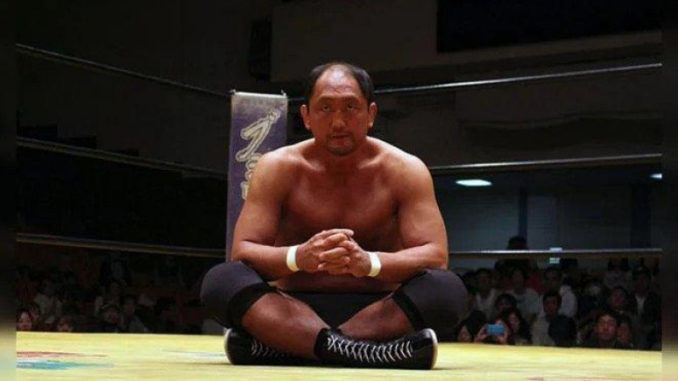
As well as ZERO1, Otani would wrestle for Fuyuki Promotions, where he was a participant in a War Games match – something that never ever happens in Japan with an all-native group of wrestlers. Appearances in AJPW, NOAH and BJW would be dotted around his work at ZERO1 as he became the main fixture of the company after Shinya Hashimoto – a mentor to Otani who he'd been assistant to in his Young Boy days and kept a close friendship with after – passed away in 2005.
Otani would win the company’s World Heavyweight title and then the Junior Heavyweight belt, holding the former for a month in the winter of 2009 but holding the latter for more than a year after beating Minoru Tanaka for it on 2015.10.11 and losing it to Takuya Sugawara 480 days later.
Shinjiro would make sparse appearances in a New Japan ring after 2005. He beat Koji Kanemoto in the Dome on Jan 4th, 2006 in the final annual New Japan tradition before it was branded with the Wrestle Kingdom name we all recognize. Otani would also compete in the 2008 G1 Climax, and then get a crack at the IWGP Heavyweight Title the year after in a fun 4-star match against Shinsuke Nakamura.
The final two matches of Otani’s NJPW career would be on 1.4, seven years apart.
2013 saw Otani team with Keiji Muto in a loss to Hiroyoshi Tenzan and Satoshi Kojima. 2020 saw Shinjiro as part of the festivities of Jushin Liger’s retirement weekend when on Night One of the Wrestle Kingdom double header, he would team with Naoki Sano, Rysuke Taguchi and Tatsuhito Takiawa to beat Liger’s team of him, Tatsumi Fujinami, The Great Sasuke & Tiger Mask, with NJPW current employee Taguchi pinning Liger.
You might have noticed no Koji Kanemoto there. While the break with NJPW was amicable, it wasn't amicable enough for Koji to be part of Liger’s final weekend of matches even as one of Jushin’s great rivals.
If the death of Harambe was the main course of the world going to hell, was Liger’s retirement the dessert…? considering what would happen in the months after Jan 4th/5th, 2020.
Koji still wrestles today. Post-pandemic, he wrestles for various companies and on many “produce shows”. He appeared on a Sendai Girls Anniversary show where he teamed with CIMA to face Kuroshio TOKYO Japan and Seigo Tachibana and got the chance to work on the same card as the best female talents in the world… like Safire Reed!
Imagine how much he learnt of Saf that night?
(Ok, I just wrote that to pop some friends of mine. Seriously, though: Safire Reed is a future star in this art.)
Koji wrestled on a ZERO1 show in 2022 teaming with Kazuyuki Fujita, Kendo Kashin and Tatsuhito Takaiwa to face Hi69, Kenoh, Manabu Soya and Tadasuke – a show that was a fundraiser to help Otani after an accident in the ring that would change his way of living.
On 2022.4.10, Otani was challenging the ZERO1 World Heavyweight Championship against champ Takashi Sugiura at ZERO1’s 21st Anniversary show. Takashi would hit a German Suplex on Otani with Shinjiro hitting the turnbuckle. But Otani became unresponsive. He was still alive luckily, but after being transported to hospital, he was diagnosed with a cervical spinal injury.
Unable to move his limbs, he needed surgery and after it was successful, the long rehabilitation from his injuries that left him paralysed would start
He has regained some limited movement and sensation in the last four years but when he appeared at a NOAH show a day after the fourth anniversary of that really scary night at Sumo Hall, Otani was in a wheelchair… but looked in good spirits.

But it was a reminder of the sacrifice and risks that wrestlers make for the art of wrestling. Koji Kanemoto at the age of 59 is reduced to wrestling on shows put on by companies such as YPW, VKF and KOBE Meriken Pro Wrestling and has wrestled TAFKA Ikemen Jiro, which is a fate that might be worse than watching Friday Night Smackdown regularly.
Shinjiro Otani and Koji Kanemoto were featured players in the glory days of the Junior Heavyweight division when New Japan was in its zenith as a box office attraction (it wasn’t the late 2010s, folks). One (Otani) was the best technical wrestlers in the world and the art’s best heel, while the other (Kanemoto) was arguably the best worker before the Five Star era of New Japan – one the most critically acclaimed eras of all time.
The end might not have been glorious for either but the peak was magnificent.
G.O.A.T. 100 Portal
Links to all GOAT100 profiles published so far
G.O.A.T. 100 Image Grid


Comments