.png)


The G.O.A.T. 100 #96 | Mildred Burke

Updated: May 24
Welcome to the G.O.A.T. 100 where we will count down with PWM wrestling historian Peter Edge the 100 greatest wrestlers of all time, based on many different stats and criteria. A new wrestler will be added on Mondays and Thursdays every week. Here is a link to an introduction essay with Peter explaining his GOAT100 concept. At the bottom of the article you can find the GOAT 100 Portal with links to all profiles so far published, as well as a visual key... Enjoy learning more about the history of our great hobby!


In a world where men dominated the wrestling landscape, Mildred was the ultimate trend setter in making women a big deal.
Her career is notorious for the political backstabbing she suffered, as would be documented by so many outlets. The control that Billy Wolfe had over her is a cautionary tale that hasn’t been heeded by future generations. The lessons of Mildred’s run as champ were not learnt. The fame she had in North America wasn't overtaken by any other woman for decades after.
Born Mildred Bliss in Coffeyville, Kansas, she dropped out of school at 15, and moved to New Mexico, where she worked as a waitress. Later, she headed to Kansas City, Missouri with a man she fell in love with. That man, whose name we can’t find, had two big effects on the rest of her life: he fathered a child with Mildred, and he also took her on a date to a wrestling show where she fell in love with what she saw.
Burke would be abandoned to raise her child alone and start a new job as an office stenographer, but the dream to become a wrestler herself continued to bloom inside her. Her dream led her to hassle local promoter Billy Wolfe to train her. Billy was training women wrestlers, but he didn’t see potential in Burke at first sight, so he had one of his male talents give her a hard bodyslam to shut her up. But instead of running away, Burke popped back up and hit him with a bodyslam of her own. Only then did Wolfe see her potential.
He came to realize that Burke was his golden ticket… and they fell in love. They were the first power couple in wrestling. They took women’s wrestling away from grimy carnivals to arenas in the main markets of the U.S.
Life Magazine did a big feature on the pair. Burke was a perennial Top 10 Box Office Attraction in wrestling in the 40s (with the next time a woman hit the Top 10 Box Office list being Becky Lynch.) Burke is the ultimate pioneer for women’s wrestling, yet her life is inextricably linked with a controlling and abusive man in Billy Wolfe.
Billy Wolfe was an over-the-hill journeyman who ended up on the carnival circuit, with his best-known move being licking his hand and chopping an opponent's chest. Mildred becoming a much bigger star in the ring than Billy had ever been caused him intense jealousy. Burke’s and Wolfe’s marriage was littered with arguments and domestic violence, and Billy cheated on Mildred regularly. In 1953, after many attempts by Burke to extricate herself, they finally separated and divorced.
Professionally, the pair were formidable, but those red flags regarding Wolfe were there from the start. Wolfe’s first main star was Barbara Ware, who he had left his first wife for. The moment Billy saw dollar signs in Mildred, the Ware / Wolfe relationship was on borrowed time.
Mildred hit the wrestling circuit with her new partner, over the objections of her mother. In her spare time away from the office, Burke had been helping out in the family business, "Mom's Cafe." Without her free waitressing, the restaurant was sold.
Wolfe demanded to know how much his new flame had made from the sale and when Mildred answered that she hadn’t been part of the sale, she saw the dark side of Wolfe’s personality.
Billy became enraged. Cash he had expected wasn’t there, and he informed her that he wouldn’t marry her for a year, essentially starting a macabre audition for Burke to prove herself worthy to Wolfe. Plus, he threatened that if she left him, he would report her to the feds for violating the Mann Act, saying he would give evidence that she crossed state borders for "immoral purposes" (and because it was the 1930s, the feds would probably believe him without needing evidence).
Burke would face all comers – regardless of sex, limited by weight class only – offering the sum of 25 dollars ($600 in today’s world). The men that thought they could beat a woman in a “combat sport” had to be 135 lbs or under to be allowed to take part, up to 20 pounds above Mildred’s 115 lbs. Every contest would have a 10-minute time limit.
Burke's intergender challenge matches were the main attraction of a traveling carnival, while Wolfe filled the role of ringmaster. Wolfe would later claim that Burke had taken on over 150 challenges and not lost once. That wasn’t entirely true. Although she never lost a challenge match, not all of them were on the square. Some of the contests were worked with a plant – but not to make Burke look good, but the opposite – Mildred would work a match with the cooperative plant to make herself look vulnerable, barely squeaking out a win, so people would be eager to take a chance of winning a life-changing amount of money, in a time when the Depression was still making life hard for many.

Less than two weeks into the first tour, Burke caught Wolf having sex with another woman with the carnival. Burke would come to the realization that this was a business and that their relationship was a work – but when Wolf wanted sex, Burke couldn’t say no. The Mann Act would always hang over her head as long as Billy was there.
Some weeks later, Burke learnt that Wolfe had struck her infant son, Joe, after he interrupted one of his sexual liaisons. Mildred left with Joe on foot, trying to escape by hitchhiking away. After no-one stopped, she called Wolfe to come and pick her up. In her memoirs, she said that she told him if he ever laid a hand on her son again, she would kill him. Hemmed in by his legal and physical threats, this mortal ultimatum was the only possible leverage she had left… Wolfe believed her.
Burke was becoming a big attraction and the pair would make money in their roles. But that meant the control Wolfe had over her grew. Joe became ill and when Mildred asked to take time off to get him treated, Billy struck her. She left and stayed with a friend in L.A. but Wolfe rang begging her to come back. Wolfe knew that no one else made money like his now-wife. And Burke knew she didn’t have the contacts to succeed away from the promoter she had married.
What I told myself in the dark nights when I lay awake pondering my next move was that I would have to suffer Billy Wolfe – put up with the bastard to get what I wanted in life.
Burke was just a living, breathing paycheck for Wolfe and Burke had come to see him the same way.
In order to move up from the level of carnival attraction, Mildred would need a regular opponent of the same sex, (in an era where commissions banned intergender matches) and Billy found Clara Mortensen, an experienced grappler who had already been billing herself the World Women's Champ for five years.
Wolfe managed to persuade Alabama promoter Chris Jordan to book the match, claiming that it would draw the biggest gate in the state in a year, putting their share of the earnings up as collateral to convince him to give them a shot. Burke vs Mortenson sold out the arena.
Jordan ran the match-up of the Women's champion fending off the upstart Burke all over the state of Alabama and drew full houses. Then at the Memorial Coliseum in Chattanooga on January 28, 1937, Burke finally beat Mortenson to win the World Women’s Championship.

Billy Wolfe got the national media to cover the title change, and interest in a rematch soared. In April the big match was set to happen in Charleston, West Virginia. But it never happened. The problem was Clara and Mildred had begun to detest each other. This hatred between the pair would escalate to the point that when both were invited to the Cauliflower Alley Club annual reunion of wresters from the “good old days”, both refused to attend if the other would be there.
Ohio would become the base for Burke and Wolfe with Billy establishing a training school in Columbus. But Burke – now resplendent in her diamond encrusted belt – was accumulating wear and tear on her body. Her knee was hurt and she asked Wolfe for time off – to the point of begging him for time away. He finally agreed, on the condition that he find a temporary replacement while she was out.
The troupe of women traveling the country with Burke grew in number, with Wilma Gordon and Mae Weston being the standouts. Weston quickly caught the wandering eye of Wolfe and the pair had an affair. Burke and Gordon would have the first ever “Hindu Style” match, which saw them wrestle in the mud. (Wow, this is so misogynistic and racist that it would be suited for a Reform party conference event.) But the match was over with the general public. Life Magazine would run a seven-page spread on the Gordon vs Burke match.
Mildred was built to be the star of all stars. Her white costume contrasted to the black her opponents wore. She had a robe encrusted with rhinestones that cost $1,100 which would be 25 grand in today's money and her reach would continue to spread. New Jersey green-lit women's wrestling in 1940 but the women that competed didn't have the pull that Mildred did.
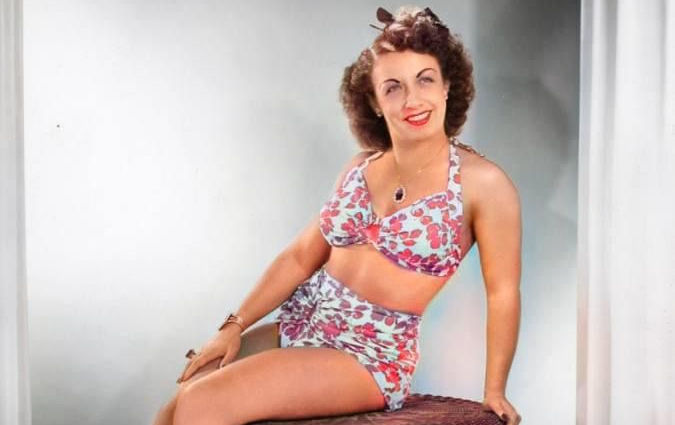
When America went to war after Pearl Harbour, millions of men joined the service to beat the Axis, and wrestling promoters struggled to keep talent. Major League Baseball had a similar problem and it almost shut the league down. The popular movie A League of Their Own, would be inspired by the All-American Girls Professional Baseball League, set up so that live sports content would still be available for Americans to attend in person, in spite of so many pro ballplayers switching uniforms. Women's sport had a moment thanks to WW2, and Mildred Burke was in more demand than ever, with 40 states allowing women's wrestling and with 40% of the national audience for pro wrestling being women. Some of those women in the stands would go on to dream of becoming a wrestler, much like when Mildred herself had seen her first wrestling show.

Billy Wolfe had more applicants for his school in Columbus. There were… criteria. The age of successful applicants had to be 18-24, the ideal weight was 130-150 pounds and the height had to be between 5’ 2” and 5’ 7”. As you might imagine, Billy believed that photogenic women were important to him making money. In Wolfe's words, aspiring female wrestlers needed to be “single, intelligent and physically agile and being sound of character”.
This was less of a job listing and more of a dating profile for Wolfe. He would blacklist a trainee when he propositioned her if she said no.
Burke’s 1943 saw her earn $22,000, one of the highest earnings in a year from any athlete of this period. But at this point Wolfe and Burke were no longer travelling together. Wolfe would accompany one of his new girls, Nell Stewart being the most frequent companion, while Burke would travel with Wolfe's son G. Bill, (only seven years her junior) someone who Mildred would go on to have an affair with.
The early 40s saw Burke's fame widen to reach Mexico. In 1944 Burke defended her world title in Arena Coliseo against Elvira Snodgrass, and the following year she wrestled in Arena México against Rosa Evans. 1948 saw Burke voted sixth in the AP poll for female athlete of the year – but in spite of all this success, her world was dominated by the strife in her personal life.

In the early 50s, Burke’s World Title was sanctioned by the NWA once Billy Wolfe was invited to join the firm – in spite of the NWA Men’s champ Lou Thesz's distaste for women’s wrestling, comparing women’s graps to “midgets” and “wrestling bears”.
But in 1951, the end was beginning. Burke was driving to Oklahoma from her new home in California – where she was now living with G. Bill (while still married to Billy) – with both her lover/son-in-law and her son, now 17 years old, in the car with her when they were t-boned by another vehicle. Burke broke five ribs, injured her neck severely and dislocated a sternoclavicular joint. G. Bill suffered a fractured skull and broke so many bones that he would be trapped in a bodycast for months. That would be the end of the relationship.
Burke was told she needed at least six months to recover but Wolfe pressured her to return to the ring sooner than that, as he was anxious that she do the job to Nell Stewart to crown a new champion. She refused to lose to Nell, saying that if Billy thought she was good enough to beat her, have her prove it. It was a challenge for Nell to beat her in a shoot. Burke had physical possession of the belt as an insurance policy to not be blackballed anymore by her estranged husband.
As part of this dispute, Wolfe would beat her up along with his son (because G. Bill couldn’t stand up to his bullying father) outside a liquor store, in front of her teen son, Joe. When she failed to appear at the annual NWA convention, Billy spread rumours that she had cancer.
In 1952, after 8 years of not living together, Burke finally served Wolfe with divorce papers. She asked for no property, no alimony. Burke asked for just one thing. Billy to get for her a membership in the National Wrestling Alliance, which never happened. That was more on the NWA’s part than anything. The NWA did want Burke and Wolfe to settle an agreement, arbitrating discussions between the camps. But their version of negotiations saw Burke sitting in the lobby of the hotel where meetings took place, while the men discussed matters.
The solution was that one had to sell to the other. Wolfe agreed to sell his right for 30 grand, which Burke agreed to but had to scramble to find investors to help raise the money needed.
Wolfe agreed to refrain from promoting women’s wrestling for five years, but this agreement was almost immediately wriggled out of via proxies. Of course, Nell Stewart ran an enterprise out of Al Haft’s gym in Columbus which Wolfe just happened to own the lease to, where he would book a tournament to crown a new women's champion – which would be run by June Byers, who was now married to G. Bill.

But Burke was not going to give up. She sold her robe and her diamonds to wage war against her ex with her new company called Attractions, Inc. But with Wolfe encouraging his promoter contacts to blackball her, she just wasn't getting bookings. Her business was failing to the point administrators were appointed, and the judge made Billy Wolfe the main one.
The NWA took Wolfe’s side in the battle between the pair, but even then they had enough of Billy Wolfe being Billy Wolfe, eliminating him from any role in official supervision of women’s wrestling. But even if Wolfe’s reputation took a hit, Burke had no money left.
Byers would make the rounds as celebrity guest on game shows but she didn’t have the fame of Burke. In a world where a disputed champion was not going to cut it, the women’s world title needed to have one undisputed champion. Burke wanted no part of transitioning the belt from herself to Byers, but was desperate for a booking for a cash infusion to her struggling business. She told Wolfe they could have the match, but if Byers wanted the win, she would have to earn it. She had trained Byers herself and was confident that even recovering from a knee injury, she was in no danger from Byers. Her protege didn't have the grappling skill to beat her "on the square".
On August 20th, 1954, in the city of Atlanta, Burke would face Byers: the winner of this fight would be recognized as the undisputed World Women’s Champion. Rumors swirled among those "in the know" that this would be a "shoot" – that the outcome was not prearranged and anything could happen – building interest to a fever pitch. Byers trained with Ruffy Silverstein – an NCAA Champion turned pro wrestler who was Haft's "policeman" in the Ohio territory –and entered the match with more muscle mass than ever before, weighing in at 180 pounds.
For six minutes, the pair circled before June landed blows to Mildred's ribs. At 16 minutes, Burke’s knee buckled and she fell to the mat, with Byers falling on top and getting a three-count to win the first of the three falls.
For the next 42 minutes, nothing happened. Byers’ increased mass gave her an advantage, but also meant she gassed out earlier than she wanted to. And Burke with her knee hurt and a ribcage causing problems couldn’t do anything to capitalise. Imagine a really bad UFC fight and that was Byers vs Burke.
The athletic commissioner for Georgia, with a restless crowd starting to get agitated, got on the mic and said if a fall wouldn’t happen in the next 5 minutes, he would call it.
300 seconds later, the bell rang. It was over after 63 minutes.
The match that was supposed to kill any controversy actually hurt the credibility of women’s wrestling. In this time, two winning falls out of three contested was the requirement for a world title change in any gender, and only one fall was decided in this match. This meant Burke claimed that she had retained her belt, but Byers had scored the fall and pinned the champ clean as a sheet. Immediately after the match, Billy Wolfe sent telegrams to his contacts in the national media explaining his and Byers' claim to the title, so even though the ring announcer had said that Burke was still champion, the AP’s headline was “June Byers gets moral victory over Miss Burke.”
The match had such poor feedback that Atlanta promoter Paul Jones tried to get out of paying Mildred her fee. In the end, her son had to hock one of her diamond rings so they could get back home to the west coast. But in spite of everything, both Byers and Burke claim that this match is the best of their careers.
This war between Burke and Wolfe/Byers would cost both camps a lot of money with only one side having Mildred's star power, and only the other having Wolfe's contacts with wrestling promoters.
Wolfe would continue promoting women’s wrestling even with the NWA's disapproval of his shenanigans. He would go on to marry Nell Stewart. (Guess how that went.) After that divorce, he would continue to date the women wrestlers he would employ, ranging from 18-20 years old. As he got older the age gap widened until he was three times the age of his paramours. Wolfe would die of a heart attack on March 7, 1963 at the age of 66.
After the Byers match, Burke returned to her home in Los Angeles and continued to bill herself as the World Champion, even though the NWA recognized Byers. But some combination of lingering injuries and the hit to her prestige as champion led to her finally hanging it up just a couple years later.
But Burke would continue to train young women to be wrestlers and book shows for her growing troupe, now through a new company called International Woman’s Wrestlers Inc. Burke had made her home base California ever since separating from Wolfe, but ever since the first Golden Age of women's wrestling in '43 & '44, their state commission had refused to sanction women in wrestling. But they finally sanctioned it again in 1966 with Burke’s help. Burke is also credited as the mother of joshi, bringing women’s wrestling to Japan – but in the States, away from the west coast, she was done.

The Fabulous Moolah was the new queen. Burke tried to contact her to work a program but Moolah never responded. Eventually, Moolah took over Burke’s territory on the west coast, and that was that for women’s wrestling in the USA for many decades – it was Moolah and nothing else.
As someone who is an advocate for women’s wrestling, it’s very dismaying that Burke is just one of five women on this list – and the only American woman. Why is that?
With this and the next entry (spoiler alert – I talk about Bobo Brazil and black wrestlers' lack of representation) – with the amount of explanation for the lack of equality I’m doing – it might sound like a Revolution Pro podcast post International Women’s Day. But the plain fact is wrestling’s evolution left behind black wrestlers and women. In the women’s case, the biggest star of women's wrestling in North America in the era following Burke's retirement, "The Fabulous" Moolah did more to harm the evolution of women in wrestling than she ever did to help.
The words “complicated legacy” is associated with The Fabulous Moolah and there are plenty of outlets that have reported on the abuses that Moolah inflicted on “her girls”, and when I do my G.O.A.T. 100 Women’s edition next year, I’ll go into it more but not many talk about the negative influence she had on the craft in the ring. The “Moolah style” of Moolah and the girls she trained meant that women’s wrestling in North America remained static throughout the 60s to the early 80s.
Moolah's decades-long stranglehold on women's wrestling in North America is a big part of the reason representation of women in this list is minimal. All the work Burke did to build up the women’s wrestling game was knocked down by Moolah – but Mildred Burke's work should never be forgotten. She survived a marriage that saw her abused and she survived an industry that saw women as second-class citizens. Mildred would pass away on February 18th, 1989, to little notice from the wider wrestling media or audience.

The Wrestling Observer’s Dave Meltzer never did an obituary on Mildred. To be fair, she was in the first class of the Wrestling Observer Hall of Fame in 1996, one of twelve women in the 272 strong field currently in the HOF. (By the way, Moolah isn’t one of those 12.)

Burke would end up being inducted in the 2016 class of the WWE Hall of Fame – in the legacy wing, in which you get a mention on the WWE website, but not any recognition on the main stage of WrestleMania like The (babyface pimp gimmicked) Godfather got when he was inducted that same year.
The biographical movie of Mildred Burke's life, Queen of the Ring, came out recently in a period where wrestling-related content in mainstream outlets has increased greatly, and while I haven't seen it myself, by all accounts the film rightly focuses on her accomplishments as a single mother.

Even now, motherhood and female athletics are strange bedfellows that mainstream sports media outlets don’t want to have a conversation about – but Mildred Burke showed the world what could be done as a single mother. The word "pioneer" might actually be an understatement when you talk about Mildred Burke.
G.O.A.T. 100 Portal
Links to all GOAT100 profiles published so far
G.O.A.T. 100 Image Grid



Comments