.png)


The G.O.A.T. 100 #99 | El Solitario

Updated: May 24
Welcome to the G.O.A.T. 100 where we will count down with PWM wrestling historian Peter Edge the 100 greatest wrestlers of all time, based on many different stats and criteria. A new wrestler will be added on Mondays and Thursdays every week. Here is a link to an introduction essay with Peter explaining his GOAT100 concept. At the bottom of the article you can find the GOAT 100 Portal with links to all profiles so far published, as well as a visual key... Enjoy learning more about the history of our great hobby!
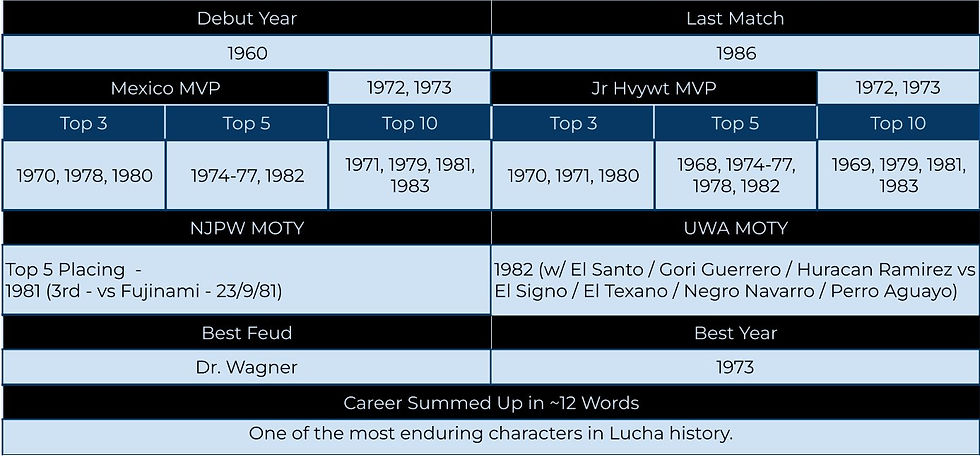
In this project I’m working on to help people look at the greatest of the great, I want to use data points to help separate the #88 to #89 in this Top 100, but when it comes to the land of Mexico and lucha, the chance to see data points is as difficult to get as an Uber outside a London tube station at 12:05 am on a Sunday night.
Box office records are sketchy, publishing of awards are the same. Cagematch ratings on Lucha pre-2018 are miniscule and I can't even use the vibe test when it comes to quality of work, as wrestling was banned from being shown live on Mexican television because of an incident in the 50s when a child died when “play wrestling” in his home.
And then there’s my personal blind spot on lucha. I just don’t get it. I appreciate people’s reverence and love for it, but I’ve always had a struggle with it. But for this to be the definitive list of wrestling’s greatest, lucha has to be part of this story about the history of wrestling. But how much lucha do I include in this project?

The best guide I've found to the representation of lucha on this list is the Observer Hall of Fame. Of its 260 acts inducted by vote or in the original 122-strong class in 1996 that Dave Meltzer put in by himself, and the 1997 class that was a Dave special, 16% came from the Mexico bucket on the ballot. So there: at least 10-15 wrestlers that spent a hefty amount of time in Mexico during their career will be on this list – but who?
Obviously, El Santo. Mil Mascaras, too. But in delving into the history of lucha, some names came into the sphere that just made sense, some surprised me, some are obvious when you actually think about it, but one really came out of nowhere.
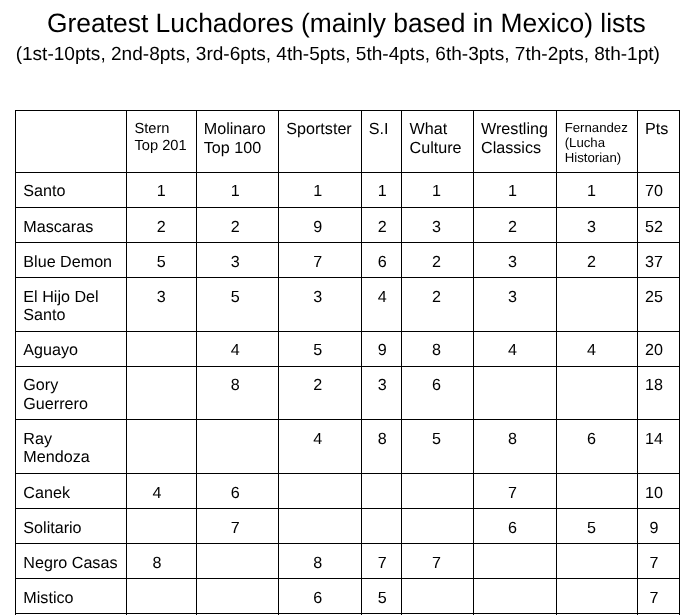
El Solitario’s career is one that is away from the mainstream attention of wrestling fans. It's notable from the above table that Solitario doesn't feature in mainstream lists like SI or WhatCulture's. He pops up in John Molinario’s book on the Top 100 of all time that was released in 2001 at 63rd, and also Jose Fernández’s list when he took part in a project with fellow historians to look at the greatest ever. Fernández’s knowledge of lucha history is enough that when he rates him so high it makes your head turn to him when researching lucha history – and once you research Solitario, his data is hard to ignore.
Solitario was considered one of the best luchadors of all time by historians due to his strong work ethic and an ability to effectively communicate storylines in the ring, and he took an unequaled pride in honing his craft as well as being described as “explosive and intense as any flyer ever in wrestling” by Fernández. It’s just a shame we have such limited footage of him to see.
Roberto Gonzalez Cruz was the youngest of seven children. One of the seven, Jesús, was a wrestler under the name Othon Banzica and was close to Roberto, teaching him wrestling moves when the youngest of the Cruz clan was a year shy of teenage years. But in 1959, Jesús died in the ring. Instead of being demotivated, Roberto used the tragedy as a base – to seek to honor his beloved brother, and to gain success of his own.
He started training under Joe El Hermoso at the Gallo Madrugador gym, despite the ardent disapproval of his parents after already losing one son to the ring. But after several months of training, at the age of 14 he made his debut alongside Adolfo Contreras, who would later be the biggest star of the Mexican indies as “El Hippie” Renato Torres.
Wrestling for Elías Simón in the small towns of Tecomán and Ciudad Guzmán in the state of Jalisco, Simon had an idea to promote Cruz and Contreras as the sons of the hottest stars in the lucha business at the time, with Roberto being billed as “El Hijo Del Santo” and Adolfo being alternately billed as the son of Charro Aguayo or Blue Demon. Eventually, Roberto became Othon Banzica II, shortened to El Zica II (number being dropped shortly after his debut under the new name) to honour his older brother.
Cruz moved to Tijuana but struggled to get regular work because of his age (being of teenage years at the time) and also his size – being too skinny, despite his athleticism being ahead of his generation. Cruz would work on his body, but the lack of dates meant that Cruz had to live in an abandoned car and (according to luchawiki) got a job in a nightclub in which he played a bongo to accompany an exotic dancer… in which he “had to darken his body with burnt motor oil to look African”.
That is a genuine thing that is on luchawiki.
Cruz would get a call from Ray Plata, a big-named promoter, so, in 1966 at the age of 20, Zica was already working Arena Coliseo in Guadalajara – but the worker who was one of the most improved in lucha needed a name change. For his new start, he became El Solitario – the Lonely One, in English – based on The Lone Ranger character.

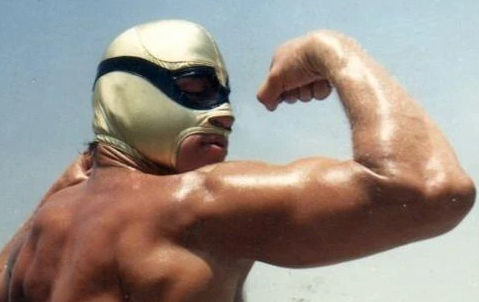
“Llanero” (Lone) was removed from his name for copyright reasons, but he adopted a look with black-and-yellow tights and a mask – with a design around the eyes similar to the look of the comic-book and TV-show character.
Solitario’s success under the new gimmick came quickly, taking titles like the Occidente Welterweight Title, but (more importantly, in lucha) taking the mask and hair of opponents in luchas de apuestas (i.e. stakes) matches.
At the end of the year, Solitario was wrestling for EMLL and was gaining traction. He was involved in a hair vs. mask match against Ray Mendoza, one of the biggest names in lucha, (and – spoiler alert – on this list) and took his hair. Then two weeks later he took the hair of another Top 15 of all time luchador, Rene Guajardo. This was the literal definition of a “rocket push”. Solitario was the hottest thing in lucha.
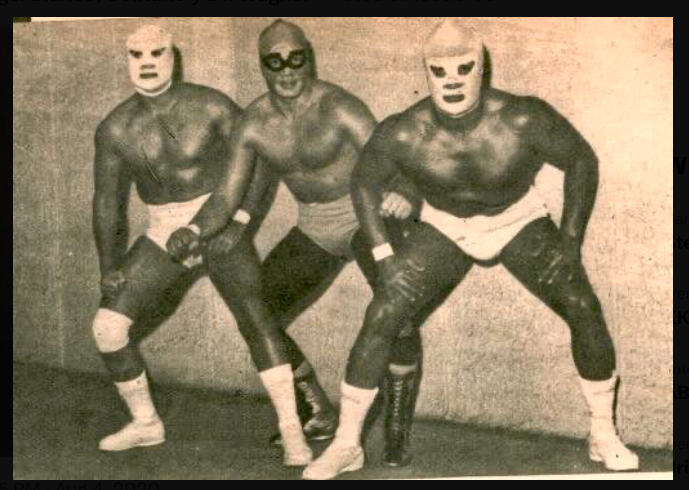
The next year, La Ola Blanco (The White Wave) faction was set up with Solitario, Angel Blanco and Dr. Wagner, to help rejuvenate the tradition of the trios match that had gone by the way-side the previous decade. But Solitario’s popularity was such that he was turned face against his rudo partners, with Blanco’s mask going quickly in the feud. Solitario would also go up the weight divisions and win the NWA Titles in Middleweight and Light Heavyweight, the latter seen as the most prestigious belt in lucha.
The early seventies saw Solitario as the Most Valuable Player south of the border with feuds with El Rayo de Jalisco, Ray Mendoza and Alfonso Dantés popping great numbers in Mexico City.

The first big mass switch of wrestlers from EMLL to a brand-new company would happen in the mid-70s, and it was El Solitario who was the first to defect to the Universal Wrestling Association from the established leader of lucha libre – bringing his former La Ola Blanco teammates with him to carry on their feud.
His fame led to Solitario becoming a hot ticket in Los Angeles and the Olympic Auditorium for LeBell’s NWA Hollywood Wrestling. He also turned up in World Class Championship Wrestling, appearing seven times, with his final appearance in the Dallas territory being Fritz Von Erich’s retirement-match show, where he beat René Guajardo. Solitario had three tours of Japan for NJPW, which included a “notebook” match against Tatsumi Fujinami for his WWF Junior Heavyweight Title (don’t worry – wrestling belt politics will feature heavily in this series as we go on).
Solitario would make up another trio with Anibal and Villano III (a son of Ray Mendoza) in what is known as the “Trios Golden Years”... but the man modeled after the Lone Ranger would fittingly, for the majority of his career, make it on his own.
All of his six title-reigns would be singles titles, but it was his apuestas record that he was famous for. Of his 39 recorded apuestas matches, Solitario won 37, the only two defeats being versus Anibal in 1984 with Solitario losing 10,000 pesos in a night (who hasn’t lost cash in a bet?) and against Fantasma Negro in 1965 (but luchawiki put "???" under the apuesta column in this match). Of those 39, sixteen saw Solitario put his mask on the line, the final one being against his career rival, Dr. Wagner.
On the first day of December, 1985, the two would face each other in Plaza de Toros Monumental selling out the 15,000 capacity in what was branded as the “war to settle it all”. In a two-out-of-three falls match, Solitario would take the mask from Wagner – meaning he had taken each of his former La Ola Blanco teammates' masks, fifteen years apart. The reason it was the final one? – Solitario would go under the knife on April 6th, 1986, thanks to an injury… and when he went under anaesthesia, he never woke up.

The circumstances of his death have seen reports vary and urban legends sweep an industry that has seen “rumour and innuendo” desecrate the business.
The Wrestling Observer reported that Solitario had a heart attack and never recovered. This is actually the most incorrect take on the story. To be fair, Dave Meltzer wasn’t featuring lucha in the Observer back then and he didn’t have the sources he would have in the 90s. (That’s just a lot of words to say he hadn’t met Konnan yet.)
The “official” story is that Solitario had a very serious injury he hadn’t taken care of, but even what that injury was varies in accounts of this period. Some reports say his back, some say knee. In a match against Fishman (which isn’t recorded in Cagematch) the injury that needed looking at was reaggravated… and when the operation that was needed happened, Solitario had a heart attack on the table and couldn’t be revived. But some people say different.
Blue Demon in his autobiography said that Solitario had died from a “very strange illness” that he never talked about in his life (yet Demon knew about it) and Jose Fernández, one of the men behind luchawiki, wrote on the site that a WCW wrestler told him that Solitario was high on cocaine on April 6th and didn’t tell the doctors that he was on coke, and a combo of the Columbian marching powder and the anaesthesia caused the heart attack.
In all likelihood, the truth will never be known, but what we do know is Roberto Gonzalez Cruz died too young. He was 46 days shy of his 40th birthday on the day he passed.
40 is ridiculously young in lucha. The other names in the G.O.A.T. 100 would still see legendary days in their 40s. Solitario would have been 46 at the onset of AAA, the second group to challenge CMLL… the same age Perro Aguayo was – and he became a massive box office hit in one of the golden periods of lucha libre.
But fate said something else. Solitario left wrestling as one of its greatest of all time. He was in the original class of the Wrestling Observer, one of 12 Mexican wrestlers to be among the 100 wrestlers, (plus 12 that made their case for the HOF for non in-ring activities) and in 2026 he is still among the Top 10 lucha wrestlers of all time and the Top 100 ever.
G.O.A.T. 100 Portal
Links to all GOAT100 profiles published so far
G.O.A.T. 100 Image Grid


I enjoy Melon playground because it encourages players to think creatively and experiment without fear of making mistakes. There is something satisfying about setting up a scene, testing it, noticing what went wrong, and then making improvements.