.png)


The G.O.A.T. 100 #86 | Billy Robinson

Welcome to the G.O.A.T. 100 where we will count down with PWM wrestling historian Peter Edge the 100 greatest wrestlers of all time, based on many different stats and criteria. A new wrestler will be added on Mondays and Thursdays every week. Here is a link to an introduction essay with Peter explaining his GOAT100 concept. At the bottom of the article you can find the GOAT 100 Portal with links to all profiles so far published, as well as a visual key... Enjoy learning more about the history of our great hobby!
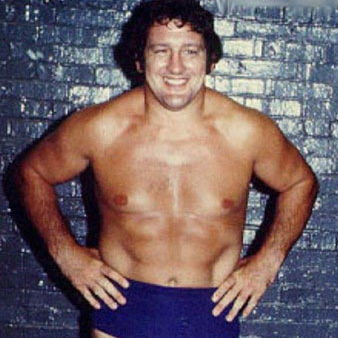
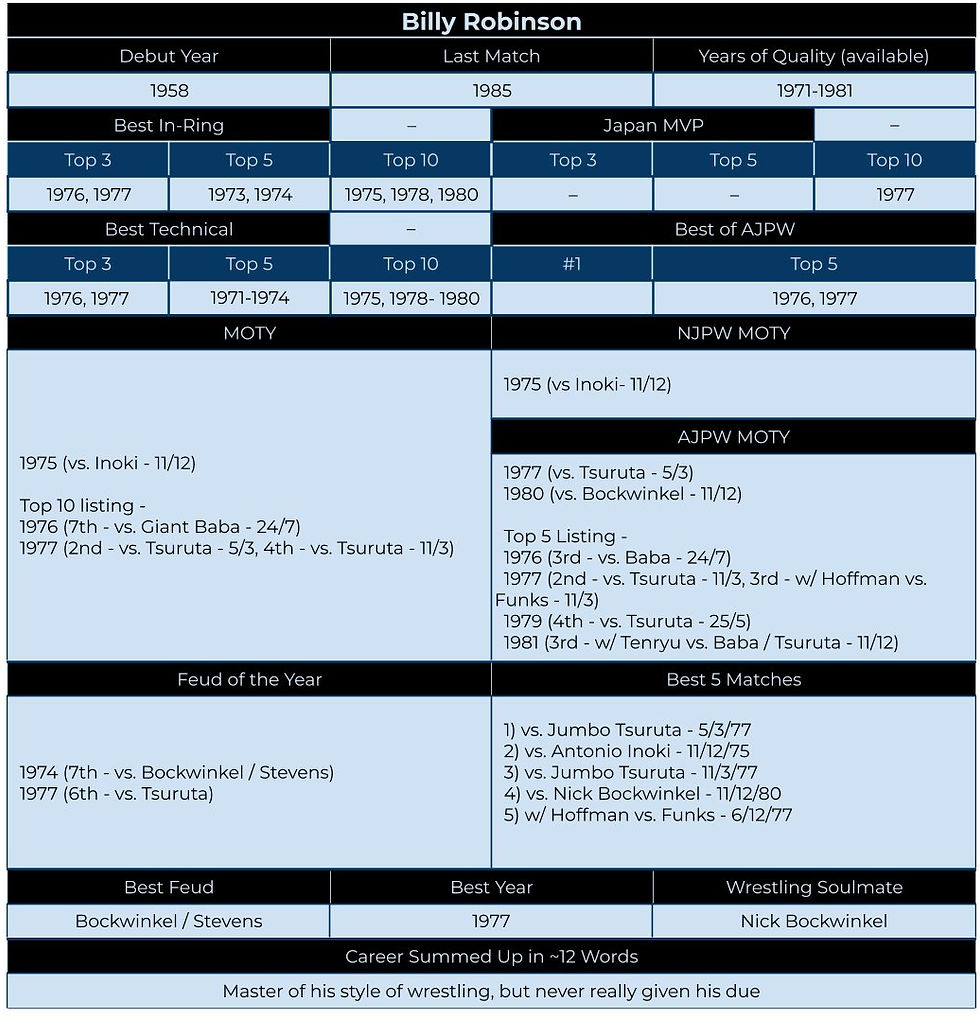
One thing that is lacking in this G.O.A.T. 100 are British wrestlers. There are 4 in all. If you know anything about me, you know who one of these four will be and I’ll try my best to not write a thousand words about that time Will Ospreay and I passed each other at the Big Penny Social before an EVE: Riott Grrls of Wrestling show and he nodded his head at me.
The old British style as described by Chris Hero as physical and mental chess has been a blind spot of many. Of the 272 inductees in the Wrestling Observer Hall of Fame, only five that spent the majority of their time in the UK wrestling scene have been inducted.
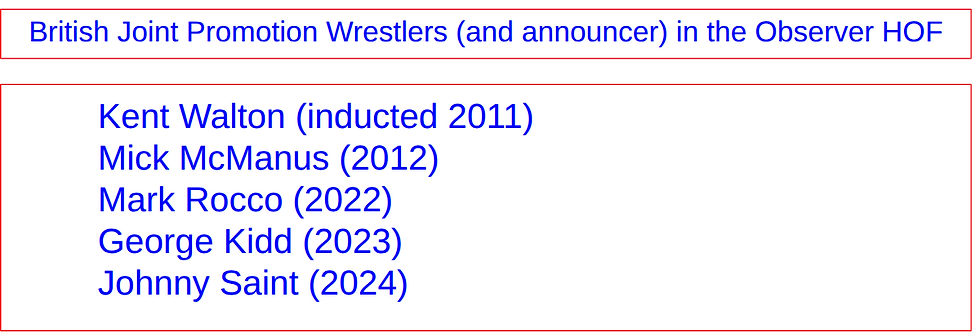
Two others with British citizenship have been inducted based on their work outside British shores: Dynamite Kid and Billy Robinson.
Robinson was born in Manchester on September 18, 1938. Coming from a family of boxers, Billy first put on boxing gloves in competition at 5 years old. But an injury just before his teenage years when he was struck in his eye socket by a metal sign by kids playing saw Billy hospitalized for five months, and also meant that he would never be able to acquire a boxing license.
Not that it kept him from fighting. In his autobiography, Physical Chess: My Life in Catch-As-Catch-Can, Billy tells a story in which he ran home from school with 3 boys chasing him. When he got home, crying, his father asked him what was going on. After Billy explained, his dad said, "You can either fight the 3 of them or fight me." Billy chose the 3 boys, and his dad went with him to make sure the fights were 1 on 1. After Billy beat up the first two kids, the third one wanted none of it. Billy says this was the first time he saw his dad was proud of him.
Apparently this is how the current Manchester Mayor Andy Burnham will become Prime Minister in a few months. He’s just going to fight Wes Streeting and then Keir Starmer.
At 14, he found amateur wrestling. Unlike today, Britain had had success at the sport in the Olympics, back before coverage of the Summer Olympics became 24/7 spectaculars. In 1952, when Billy was 13, Kenneth Richmond won bronze in the Heavyweight division at the freestyle discipline.
But Billy’s uncle wanted his nephew to try out the professional graps game. The father wanted his son to keep at freestyle wrestling but he would relent and introduce his son to Billy Riley, who owned a gym in the town of Wigan in the Greater Manchester area. Billy would train at the gym called The Snake Pit and would become British Champion in the Light Heavyweight Division. Something Billy talks about in his memoir was that the one regret he had was that he went to the Wigan gym a couple of years too early.
The year he debuted as “a pro”, 1958, was the year that Cardiff in Wales held the Commonwealth Games and Billy probably would have won gold, and would have been a cinch pick to represent Great Britain and to qualify for the 1960 Olympics in Rome.
Robinson likely wouldn’t have gotten into the top 3 placings, with multiple world-level medalists and G.O.A.T. candidates in the Light Heavyweight division globally at that time – such as Iranian Gholamreza Takhti – contending for the podium. But he would have been in rarefied air as both an Olympian and a pro in the art of wrestling.
The Snake Pit was a place that nurtured the skills of Karl Gotch, Bert Assirati and Billy Joyce. For further insight into the famous gym, I’d recommend Sergei’s 6th piece of Under the Learning Tree to learn more about the famous gym in Northwest England. It was in The Snake Pit where Robinson learnt Catch-as-catch-can, a completely different form of wrestling from the freestyle technique that he was at one point the best of the British at.
Robinson’s first pro match was against a second-year pro, Horst Hoffman in Krefeld, Germany. He became a regular in Joint Promotions, mostly wrestling in the Cardiff / Bristol area in the era when Joint Promotions was under George de Relwyskow, the 1908 Olympic Champion at Lightweight in Freestyle Wrestling.
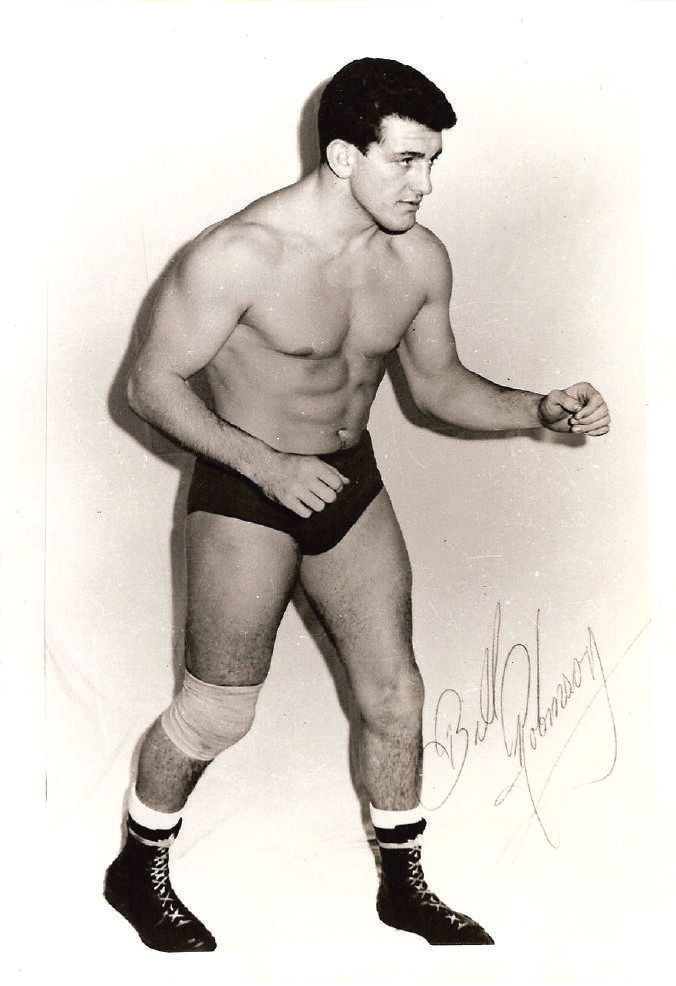
The highlight of Billy’s career to date came in May 1961, when he won the prestigious Royal Albert Hall Heavyweight Trophy. But it went largely ignored by US wrestling media, such as Charles Mascall in The Wrestler magazine, who only had a few perfunctory comments, including a passing reference to the Royal Albert Hall win – the first fleeting reference to Billy as a prospective champion. As Billy shared top of the bill honours with the other top heavyweights of the day, this ambivalence of The Wrestler was to remain a pattern for the following decade – except for a gallant rearguard action from Eddie Caldwell, who frequently paid tribute to Billy and recorded some of his great championship clashes.
In 1962 Billy ventured further afield, gaining more experience against the top men of Asia and Europe. He would leave Britain in the spring of the year for a 4,000-mile journey to India, and then Pakistan, at the invitation of Dara Singh – a wrestler on the subcontinent with such fame to his name there that he was one of the most recognisable faces in India at the time.
In the autumn of 1962 Billy returned to Europe, featuring in tournaments in the German cities of Nuremberg, Karlsruhe, Krefeld, Hamburg, and Hamburg. The Karlsruhe tournament in September saw Billy booked to finish in second place, runner up to Horst Hoffman, (that name again!) and winning in Krefeld.
Having embarked on a steep learning curve in overseas rings Billy returned to Britain towards the end of 1962. Speculation that his succession to the heavyweight championship was imminent increased.
In 1963, Robinson went to a draw with Ian Campbell on a card at Royal Albert Hall that had one of the most famous spectators to ever watch wrestling: The Duke of Edinburgh, Prince Phillip. Phillip got the invitation to attend the event on May 22nd. The glittering evening also featured fellow Observer Hall of Famers George Kidd and Mick McManus. That Billy – described as an exciting newcomer at the time – was trusted enough to be on such a card at all showed what promoters thought of him.
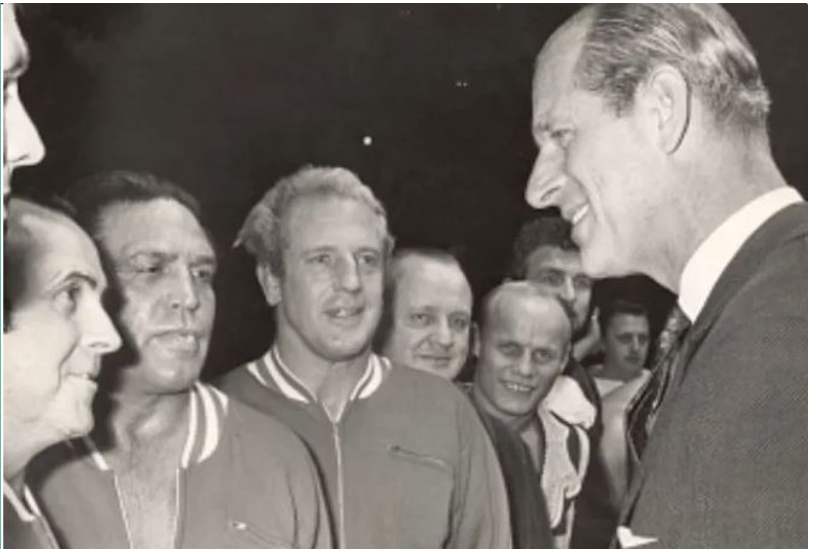
Robinson would then enter a feud with his mentor at The Snake Pit, Billy Joyce for the British Heavyweight Title, with championship matches at Belle Vue in Manchester, Glasgow and Newcastle. They put on a four-year quest for the belt that came to a head on 18/1/67 in Manchester.
But just as Billy finally became champion of the UK, the USP of wrestling here was changing and leaving his style behind. Kendo Nagasaki was coming to the forefront of the Heavyweight scene. Wearing a mask and acting more villainous than anyone that had been on the scene, he was a contrast to The Snake Pit dominated space, and as the feud was ongoing, ownership of Joint Promotions had changed to Jarvis Astaire, a boxing promoter. The pantomime element of the art was slowly but surely creeping in.
But as ownership changed hands throughout the seventies with the gambling company William Hill taking the reins with Max Crabtree as the booker, Billy Robinson saw the writing on the wall and moved on to Japan. He would wrestle for a company there called International Wrestling Enterprise, set up to challenge the main player in Japan, JWA.
The company would make its name by finding under-appreciated gems from outside Japan to face their native wrestlers – usually guys that had burnt a bridge with JWA, like its founder and owner Isao Yoshihara. Billy would have a series of matches with Toyonobori, who had himself had a messy divorce from JWA – having misspent the company finances on women, booze and gambling (just a Wednesday afternoon in Birmingham, UK) after being put briefly in charge when founder Rikidozan died shockingly in 1963.
Billy Robinson’s first calendar year in Japan would end with the Brit winning the inaugural IWE World Series outlasting the 11-man field in a tournament in which all 11 wrestlers start on 10 points and the winner of the World Series coming when the other 10 hit zero points. Billy’s World Series win showed the faith IWE had in him. A foreigner being chosen to win a major tournament was against the puroresu norm, with JWA’s World League tournament seeing a Japanese winner on all 14 editions till the JWA’s demise in 1972, with Robinson's win at the competitor in 1969 changing their strategy not at all.
Robinson would repeat the next year before finally being eliminated last in the third edition by reaching zero points whilst the winner Monster Rousimoff (the future Andre the Giant) still maintained two.
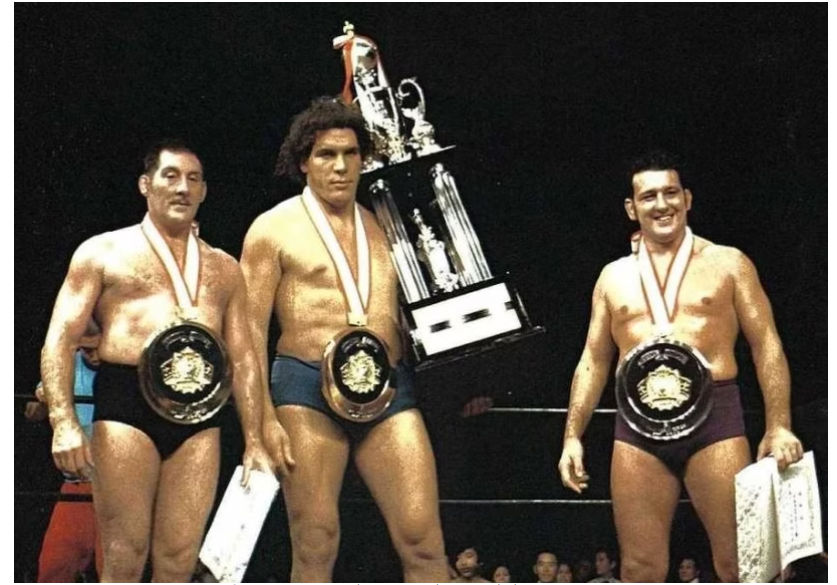
JWA’s demise in 1973 led directly to the birth of New Japan Pro Wrestling and All Japan Pro Wrestling, leaving the IWE as a distant third behind the Antonio Inoki and Giant Baba led promotions. Both Inoki and Baba would get Billy to appear on their cards with Billy going to Inoki and NJPW first.
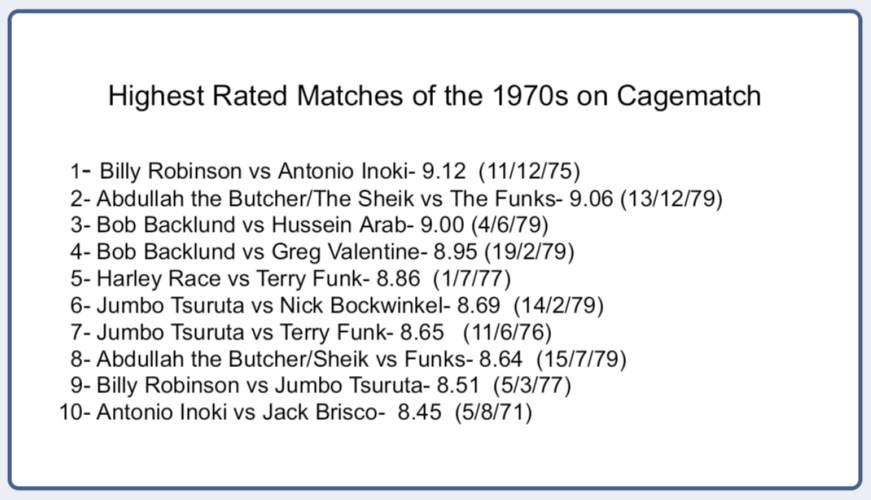
Antonio Inoki brought Billy in to act as a believable competitive challenge for him. Billed as "The Match Between the World's Top Two Technicians” (catchy), it surprised me that Inoki outright didn't book himself to beat Robinson in their 1975.12.11 match so he could claim to be the best technical wrestler in the world – but after 60 minutes and the score 1-1 in a Two out of Three Falls Match, the bell rang to declare the match a time-limit draw.
The match's 9.12 on CAGEMATCH makes it the top rated match of the 70s on the site. Chronologically it would hold the title as the greatest (highest ranked by much-later fans anyhow) wrestling match ever until the Devil Masami vs Chigusa Nagayo match on August 22nd, 1985, which gets 9.24 from voters.
The year after, Billy would step into an All Japan ring where he would team with Scott Casey against Giant Baba and Jumbo Tsuruta in a losing effort. But in singles matches, he went undefeated (albeit with a number of time limit draws and double count-outs) until a loss to Nick Bockwinkel on the Strongest Tag Determination League Tour in December 1978. Nick and Billy would feud consistently in North America as well in the 70’s in the AWA with matches between the pair spanning from 1971 to 1981.
In the early part of the decade Nick and his tag partner, Ray Stevens, would feud with Robinson, with the Brit teaming with various partners in his quest to take the tag titles off Nick and Ray. But efforts with The Crusher, The Destroyer (as Dr. X), Wahoo McDaniel and Verne Gagne came up unsuccessful until Robinson and the latter of the four mentioned above finally beat Nick and Ray on 30th December, 1972
But that reign was only a seven day interruption in Stevens and Bockwinkel’s stranglehold on the tag division that went from January 1972 to August 1975. The only other interruption was a 95 day reign that Robinson and Crusher had with the belts from July to October of 1974.
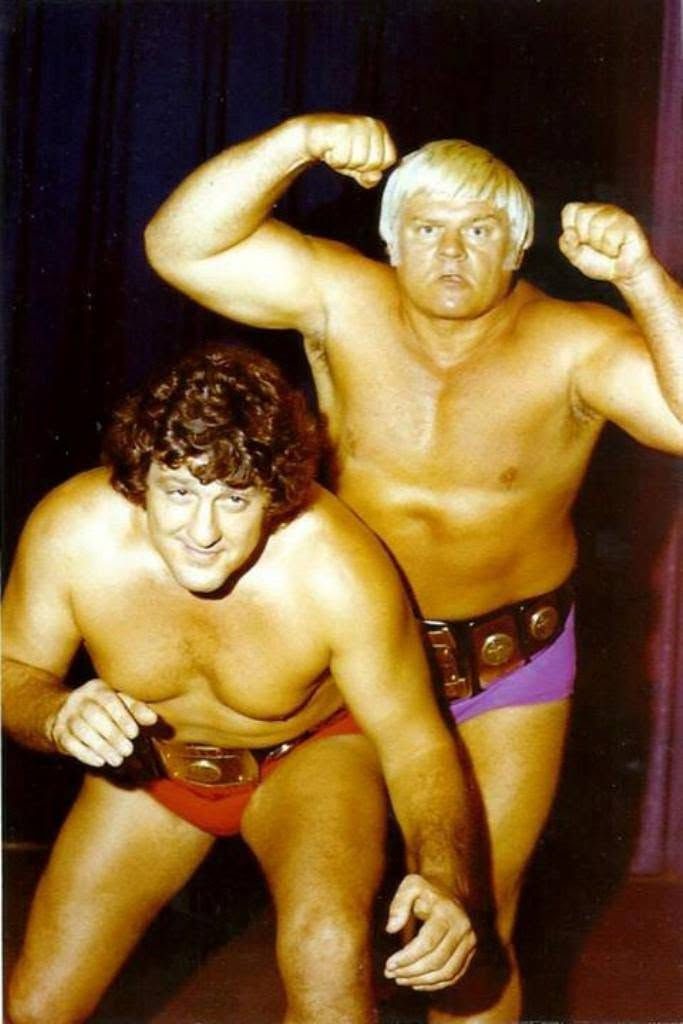
Robinson and Bockwinkel would match up multiple times in various stages of Nick’s progression in the AWA. They had singles matches as part of Robinson’s feud with Bockwinkel and Stevens and also had matches as part of Nick’s AWA World Title reign with many going to the hour time-limit, and many reaching other indecisive conclusions such as Billy winning by DQ or a double count-out.
But Billy was never given the chance to pin his main rival in the AWA and win its World Title, instead being given the British Empire Heavyweight Championship on three occasions, (which was certainly a choice when it came to naming that title especially when the multi-sports event founded to celebrate athletes from the Commonwealth took the word Empire out of its title in 1966 to reflect the changing geopolitical landscape and gradual decolonisation of the Empire.)
Two of Billy’s losses of the Empire Title would be against Angelo Mosca from Massachusetts, Super Destroyer Mark II (Sgt. Slaughter in a mask) with the third reign Robinson had of the belt being the final reign after it was abandoned in the early 80s.
But the biggest mark Billy made in the AWA was as a head trainer for Verne Gagne. There he trained a who’s who of future legends such as Ric Flair, Ricky Steamboat, Bob Backlund and The Iron Sheik.
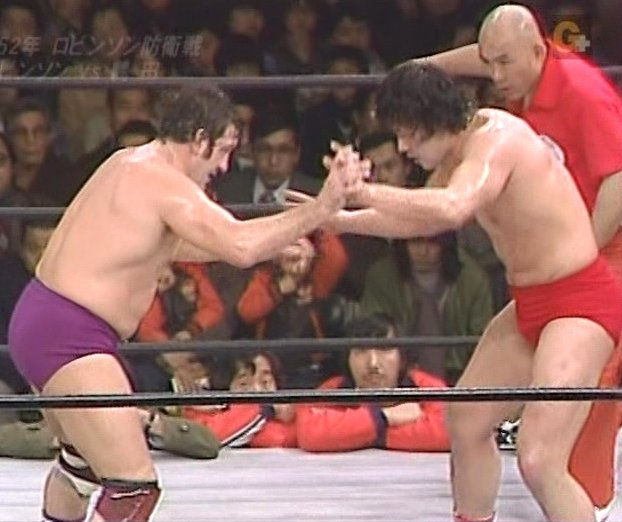
While Billy had set himself up in the AWA, he also solidified his relationship with AJPW. A trilogy of matches with Jumbo Tsuruta helped Jumbo on his rise to the ace position of the company, the position that Baba had groomed him for from the outset of the promotion. He would also have really good matches tagging with Horst Hoffman (his first opponent back in their rookie days!) against the Funk Brothers, plus also reigniting his feud with Nick Bockwinkel in AJPW’s MOTY for 1980.
If the 1960s was the decade of the brawler, the 1970s was the decade of the technician, led by Dory Funk Jr, Jack Brisco, Antonio Inoki and Jumbo Tsuruta with Billy Robinson keeping them company, and in the case of the latter, Billy helped Jumbo become an even better worker in the ring.

1978 would see Billy Robinson back in the UK for a solitary tour, billed as a homecoming with his sole recorded match to air on British TV against Lee Bronson kicking off the traditional wrestling slot at 4pm on the 16th September edition of the ITV World of Sport programme, one of the two UK versions of ABC’s Wide World of Sports, which competed against BBC’s Grandstand every Saturday afternoon with WoS being more eclectic in its sports covered compared to the establishment BBC and the Test Match Cricket, international rugby and motorsports shown. On this particular Saturday afternoon, the Robinson match would air on the afternoon that WoS showed Muhammed Ali vs Leon Spinks II.
The headlining match of the 45 minute show that afternoon was also a sign of what the attraction of the scene now was. Giant Haystacks vs Wayne Bridges showcased the territories main villain two years before his Wembley Arena match against Big Daddy that went 2:50… but also had a home viewership at 18 million.
British wrestling was going through a moment in mainstream media. Big Daddy was now the main character of British wrestling, with the man whose government name was Shirley Crabtree being the main protagonist of Joint Promotions, booked by his brother Max. Daddy would guest on popular shows on Saturday-morning TV such as Tiswas …and other shows fronted by presenters that are now best known as sexual predators.
With Daddy and Haystacks the focus of the company, wrestling in Britain was less a game of physical chess but now sports-entertainment, even before Vince McMahon Jr. had started to expand WWF all over the United States.
A sign of Billy Robinson being obscure in the retelling of the history of BritWres is that he is never mentioned in Simon Garfield’s book about the history of wrestling in Britain, The Wrestling, the most mainstream book to be released on the subject. But Billy’s impact on pop culture in Japan saw him be the inspiration for the Robin Mask character in the Kinnikuman manga series and his style of working would inspire many after him in the country.
Robinson’s style of wrestling in the vein of other self-styled hookers and shooters such as Karl Gotch and Lou Thesz helped inspire the wave of attempted start-up promotions with a “shoot-style” USP. The UWF was the most famous with its second incarnation of three winning the Promotion of the Year in the 1989 Wrestling Observer Awards and the third, the UWFi, involved in an inter-promotional feud with NJPW that helped influence the NWO storyline that shaped wrestling from the mid-nineties.
His most famous student when training students in the dojo the UWF had built that used the Snake Pit I.P was Kazushi Sakaraba. Sakuraba was the guy destined for big things in the third re-launch of the UWF, primed to take the torch from Nobuhiko Takada as the ace of the company – but the company went bankrupt again in 1998 with Sakuraba in the main event of the company's final show.
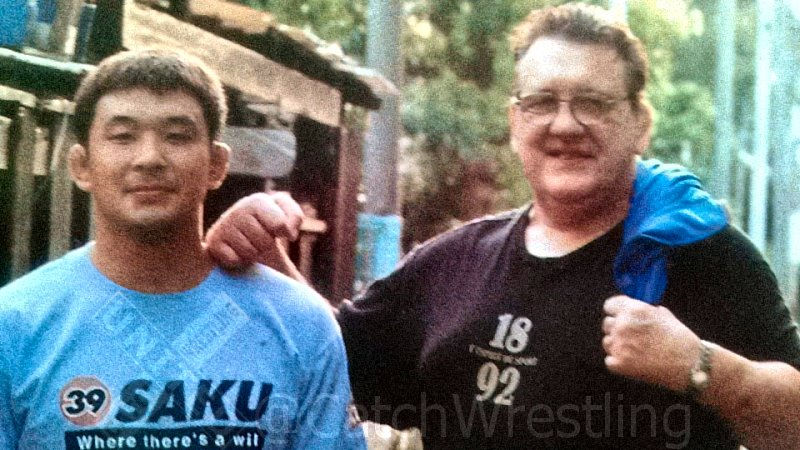
What Robinson taught Sakuraba helped Kazushi become the “Gracie Hunter”, going 5-0 against members of the famed family that brought jiu-jitsu to the worldwide masses. The most famous being a victory over Royce, the winner of the first two tournaments in UFC in its tournament era.
It’s fitting that Billy’s final match of his career was in UWFi and that it was against his wrestling soulmate, Nick Bockwinkel in an exhibition match on May 8th, 1992 at a sold out Yokohama Arena.
Done with wrestling, he managed a convenience store in Las Vegas and worked as a security guard at the Gold Coast Hotel and Casino in the city. Billy moved to Little Rock, Arkansas at the outset of the 21st century to be closer to his son’s family. He would coach the catch style of wrestling, continuing to tell trainees to “do it again” in his favoured method of teaching, with repetition the being the basis of success – like he did with Sakaruba, Kiyoshi Tamura and Gary Albright, to the wrestlers he helped train with Verne Gagne.
In his later years, Robinson would be dismissive of the skills of modern wrestlers and fighters, saying in his memoir that a modern MMA fighter (in 2012) couldn’t compete with a mid-1930s catch wrestler. To be fair, I’d rather watch 1930s catch wrestling than the dirge that is UFC in 2026.
Robinson would pass away at the age of 75 in his sleep at his Arkansas home on February 27th, 2014.
Even now, Billy Robinson and his legacy isn’t talked about much. In the third iteration of the decennial GWE project, a poll taken of messageboard dwellers that haven’t found out that discord is a thing (I will get harsher on these people as this G.O.A.T. series advances), Billy dropped into the 140th position below Dick Togo (113th) and Necro Butcher (93rd), a 90-place drop from 2016, the third largest drop of this iteration with Rick Martel and Fit Finlay just beating him out, both dropping 96 places.
In the 2014 Wrestling Observer Yearbook, part of a collaboration with that is released in conjunction with Inside The Ropes – which sees the biggest stories of the year as how Dave Meltzer reported on it, has coverage and obituaries on Mae Young, Ultimate Warrior, Mabel/Viscera and Sean O’Haire but not Billy Robinson (I blame ITR head Kenny McIntosh.)
It feels like Billy Robinson’s legacy in this art doesn't get the coverage it warrants. He was a consummate wrestler. He was a trainer that shaped moments that are unforgettable and has left behind a legacy. The history of pro wrestling cannot be written without the name Billy Robinson being prevalent, quite frankly.
G.O.A.T. 100 Portal
Links to all GOAT100 profiles published so far
G.O.A.T. 100 Image Grid


Comments